

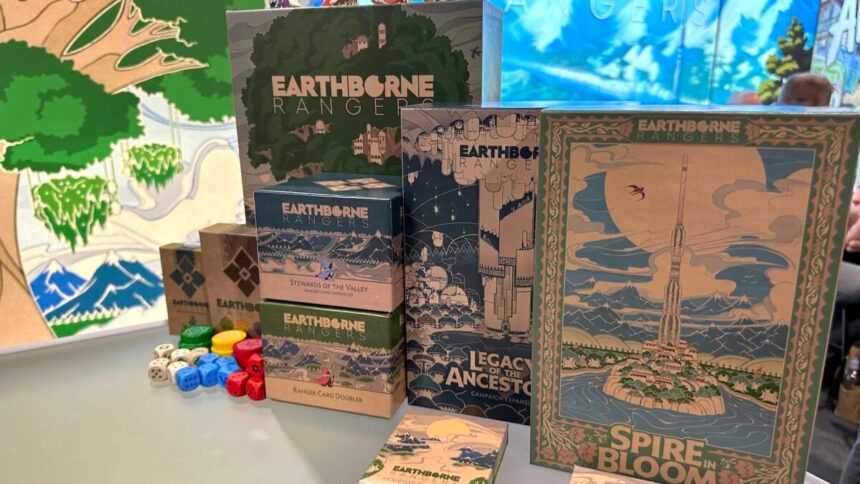
All of my 2025 was consumed by consumer tech. Gizmodo’s consumer tech team and I reviewed so many products and spent so much time traveling for various gadget-filled conferences our brains are stenciled with images of the latest hardware. I needed a break from technology. I think you do, too.
Today’s amalgamations of books, wood, and cardboard are ingenious—even if you’re forced to play them digitally. The board games and role-playing games I’ve played this past year may offer a richer experience than any AAA video game demanding your attention. I spent three days at this year’s PAX Unplugged convention trying as many games as I could. I have such rare time for board games and even less opportunity to sit down for a TTRPG (tabletop role-playing game) session with just my friends and me. Holding physical dice in my hand is the best catharsis I can offer from today’s screen-obsessed landscape.
While Dungeons & Dragons usually sucks up most of the oxygen in the realm of RPGs, the indie tabletop scene is sometimes so niche, there are some games I can recommend that may be hard or impossible to buy if you just wanted to hop on Amazon and send the warehouse workers scrambling. As a gift, you could buy the PDF for the small indie RPG GrimoirePunk—an anarcho-esotric game about using random nouns and verbs to dethrone oligarchal wizards—print it out, and hand it to your friend or loved one, but that may not feel like a gift to some. And why shouldn’t you just go out and get a Dungeons & Dragons book or one of the many branded toys or plushies? Because you’re looking for something substantive, a gift that says you know the person and what they will enjoy, even if they don’t know it yet.
Instead, I’m trying to offer a wide variety of different game types so you can get a sense of what’s out there and what may set your giftee’s heart alight. There are some games on this list that are more complicated than others. Some games require players to commit to playing with the same group of friends over and over.
9. Arcs
Arcs is one of those increasingly difficult games to describe, especially if you have no familiarity with the identities of space-based board games or Arc’s publisher, Leder Games. It’s the kind of set made for four players and boils down one of those massive 4X games (itself an abbreviation of explore, expand, exploit, exterminate) like Civilization VI or Stellaris and condenses it into a simple board with a trick-taking game at its heart. For those who don’t know what trick-taking means, think Uno, but having the highest card of a suit will win you the “trick.”
The base game itself is a tight and still evocative piece of media that will have you scratching your head about how to take a piece of your extrasolar empire and still come out on top. If I have any suggestion, it’s that you need to play with the various leader cards to really emphasize different playstyles. While the base game is great for one-and-done games, the expansion “Conflict and Collapse in the Reach” enables players to run through three interconnected games where both your board state and the characters change over time.
8. Dune: Imperium Uprising
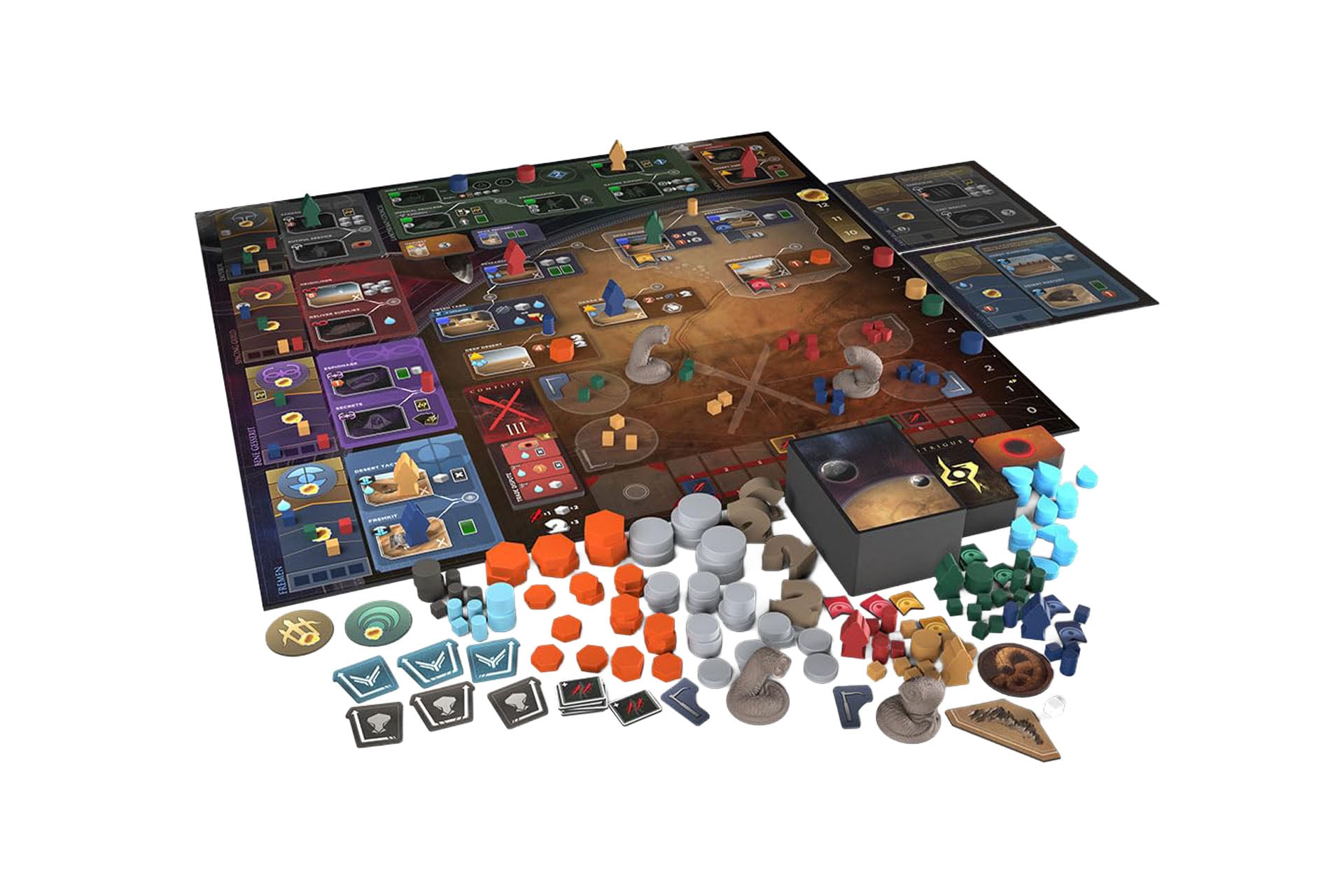
Dune: Imperium is a gateway drug into multiple different types of board games—which I guess is fitting considering what kind of “spice” this collection of cardboard is packing. The game combines worker placement and deck building into a streamlined, though thought-provoking, collage of warfare and intrigue. Players take on the role of characters you’ll remember from the films, but you’ll be racing to build up your forces, collect spice, and upgrade alliances in order to beat your opponents in points. The deckbuilding starts simple, but it slowly ramps up in complexity until each player feels completely unique in their playstyle.
The confusing thing about this game is that Uprising is technically a revised edition of the original Dune: Imperium, though the characters in that version are still playable in the more recent boxed game. There are also several expansions that can add more complexity to the game. However, I feel that Uprising is best on its own, especially if you have not played many board games. I’ve played several different Dune board games, including CMON’s Dune: War for Arrakis and the original 1980 rendition of Dune. While each has their own unique qualities, Imperium is the easiest to set up and feels the most rewarding.
7. ChessUp 2 Smart Chess Set
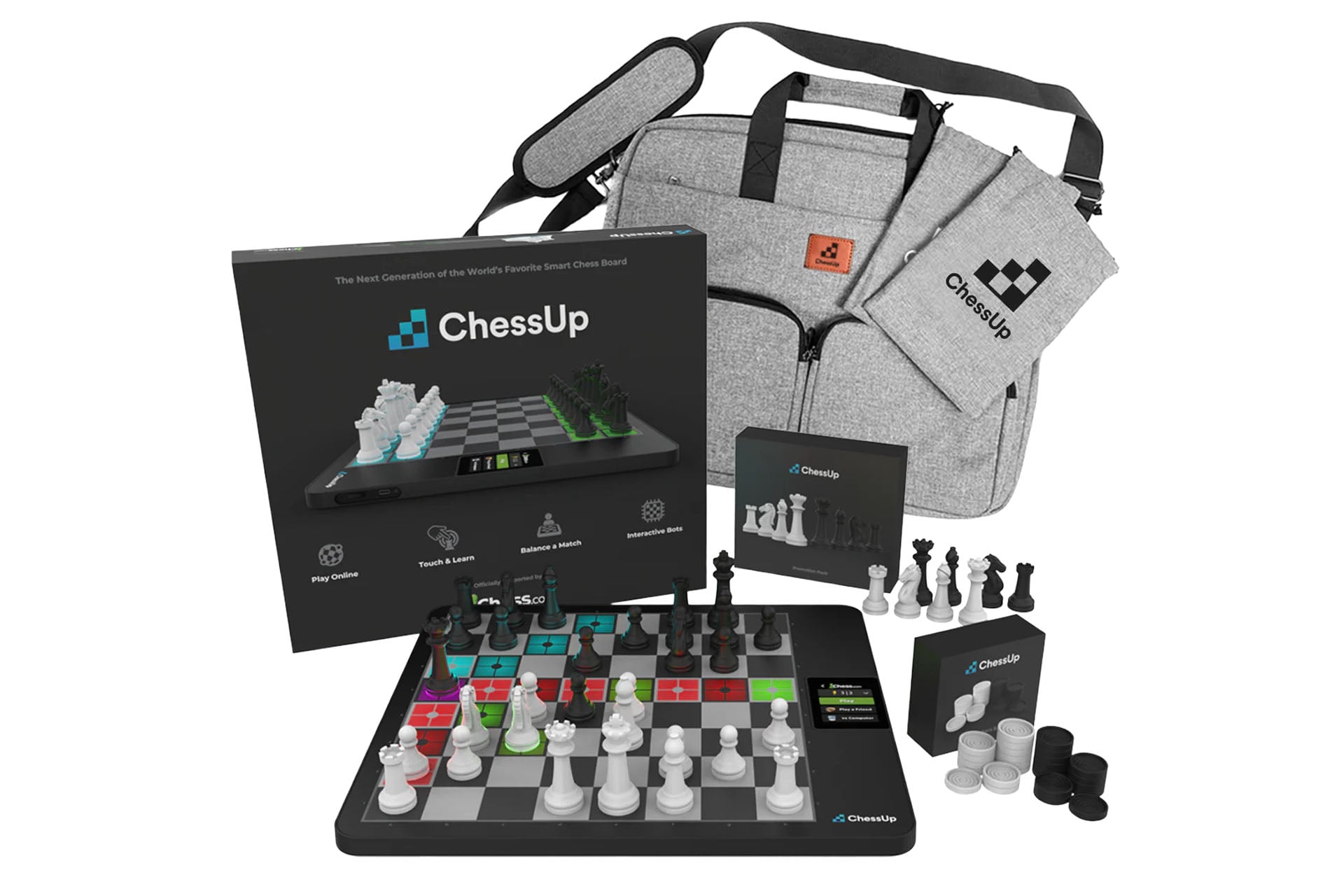
Chess shouldn’t feel as daunting as it does, especially if you don’t know what you’re doing beyond the basic rules. Against a more experienced player, every move can feel like the wrong one. The speed of your game slows, and you start to devolve into decision paralysis. Of any of the smart chessboards I’ve tried, the ChessUp 2 Smart Chess Board doesn’t feel nearly as hand-holding or complicated. It offers both in-person and online players the chance to see what kinds of decisions are possible and which may be the better choice. Simply picking up a piece will see the board glow with green, blue, or red spaces to tell players what moves are better or worse. There’s a chess clock function built in as well.
Yes, it’s an expensive chessboard, and it’s easily the most costly item on this list. It may also be the most controversial. The chessboard interacts with Chess.com to let you play digital players on a physical board. On the opponent’s turn, their move will light up and you simply follow along. This means you can be receiving the digital aid while your opponents struggle along on their lonesome. Is this computerized coach technically cheating? I’ll let the chess community come to that conclusion on their own. At least it can be far less controversial than the whole overblown anal beads chess cheating scandal from 2023.
6. Earthborne Rangers
The sun now sets just before I can even leave my office at 5 p.m. The leaves have left their mother branches bare and are now devoid of calming fall reds and yellows. So among the stacks of city blocks and slate-gray skies, having a game on hand so full of green is particularly helpful for my mental health.
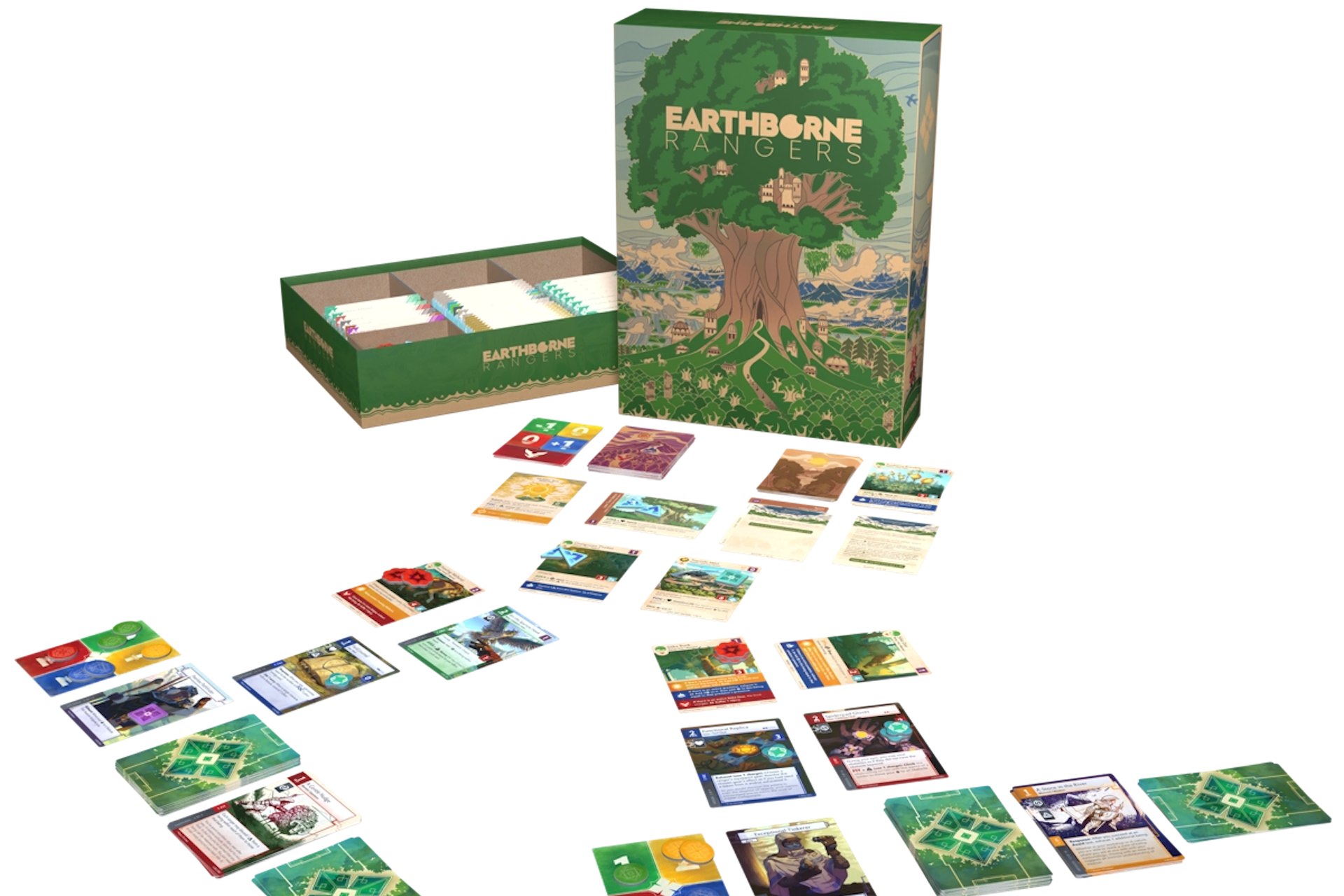
Earthborne Rangers is a cooperative game about exploring, traveling, and aiding the people in a utopian society intrinsically connected with nature. Players build decks for a variety of different classes, then set out into the world to either overcome or harmonize with the surrounding flora and fauna. I’ve played a character who excels at connecting with animals and then having those animals help navigate obstacles. When other, similar games like Arkham Horror: The Card Game ask you to scrap and scrape for every advantage, Earthborne Rangers begs you to revel in the complicated ways nature may interact with itself. For instance, a wolf-like creature may engage a deer as its next meal, only to be injured in turn by the male buck and his massive head of horns.
It’s not the kind of game you look for first for a difficult puzzle. It also won’t scratch the itch of anybody looking for a deeper story and characters with rough edges. For me, in these difficult times, there’s something pleasant about having a game like Earthborne Rangers to come back to.
5. Triangle Agency
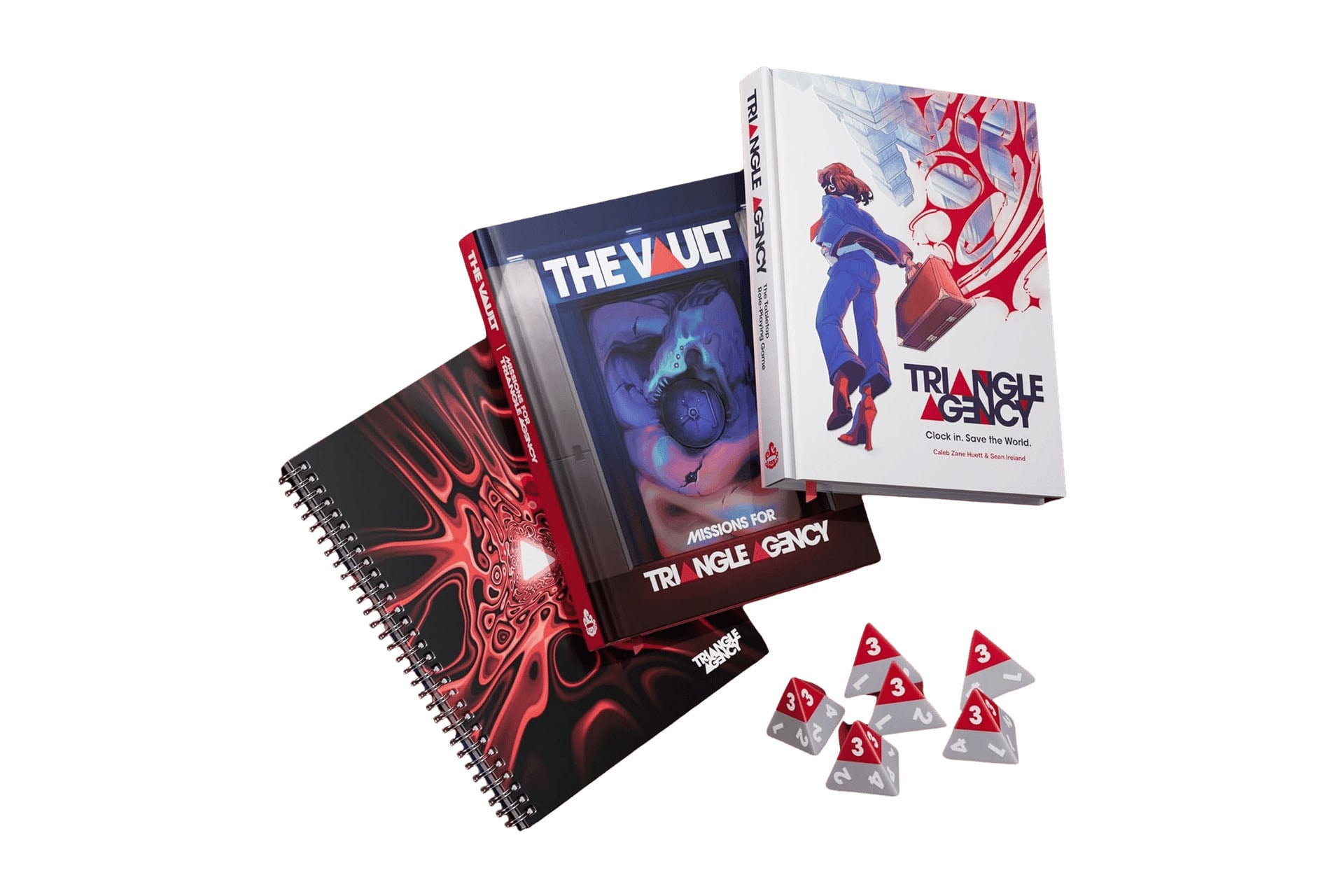
Triangle Agency is an RPG about committing to the bit. Imagine games like Control, where the incomprehensible nature of bureaucracy is interlaced with unnatural horror behind space and time, and you’d have a general sense of what this kind of game offers. But beyond that, the RPG asks players to engage with satire and horror at the same time. There’s simply no other role-playing game like it.
If you want a taste of what lengths this game goes to keep its theme, Triangle Agency asks you to roll D4 dice (shaped like triangles), trying to get as many “3s” as possible. There’s an entire section of the rulebook that is hidden from view—essentially redacted—until the players unlock those abilities as a form of advancement.
The main rulebook is beautifully illustrated, and every page has its own unique layout as if ripped from the spiral notebook of some government desk jockey. You can’t go into the game without a sense of commitment, but for those who want an RPG whose style is substance, I can’t think of another game that does it better.
4. Eat the Reich

You are one member of a crack team of commandos in the gore-filled height of WWII. You are also a vampire, coffin-dropped into occupied France. Your mission: kill Hitler and drink all his blood. If that isn’t enough to get you excited to play Eat the Reich, I don’t know what will. The relatively small and simple RPG written by Grant Howitt and illustrated by Will Kirby is immediately funny and hedonistically rambunctious with a style that combines modern over-the-top comics and old-school grindhouse sensibilities. The players don’t have to go through the motions of creating characters for themselves, instead embodying a vampire, each with their own quirks. The game is built upon the “Havoc Engine,” which necessitates players push their luck to do crazier and crazier stunts until it inevitably blows up in their face. This is a great game for players who want to run through a few sessions and laugh the whole while.
I could say more, but just look at the art in that picture above, and you’ll get a better idea of this game’s style than I could possibly articulate.
3. Fiasco
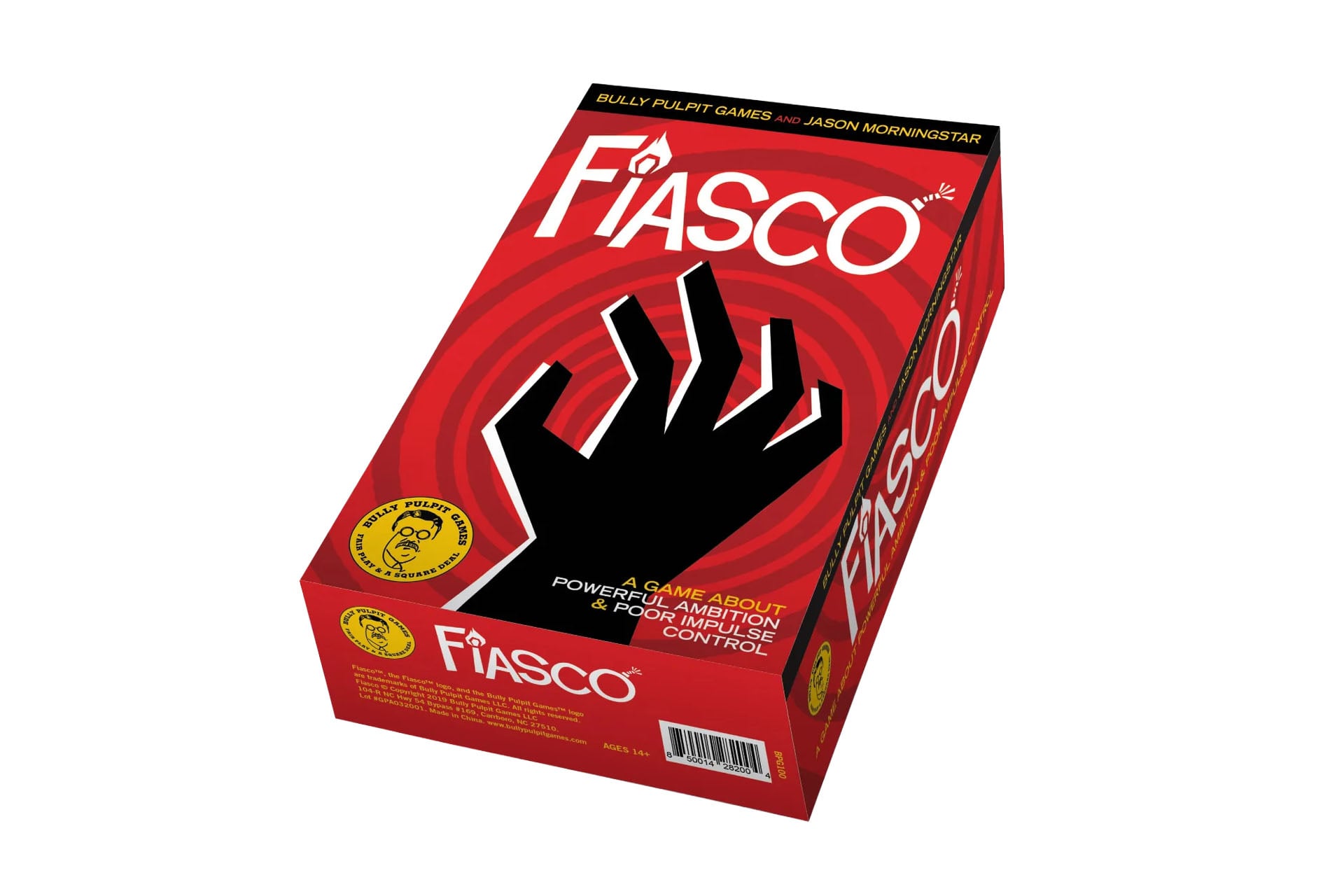
Fiasco is an absolute classic in roleplaying circles, and I personally think it’s a better gateway drug for more story-centric roleplaying games than the crunchy and often obtuse Dungeons & Dragons. Players take on the role of characters who are meant to fail, who have too much ambition and too little impulse control, all leading to their farcical downfall. Yes, it’s a role-playing game for reenacting a Coen Brothers movie, like Burn After Reading or Fargo. The end result is often zany and engrossing in equal parts. Players are forced to enact scenes with each other consistently, pushing the normally shy players to try their chops at acting like an utter fool.
While I’ve played the original game plenty, which simply relies on a single book as well as many, many fan-made playsets, the more recent boxed game makes it even simpler to get in through the clever use of cards—no dice needed whatsoever. Another one of Bully Pulpit Games’ titles, Desperation, is also a great option with a little less variety for those who prefer gothic, moodier settings than what’s provided typically in Fiasco.
2. Kabuto Sumo: Sakura Slam
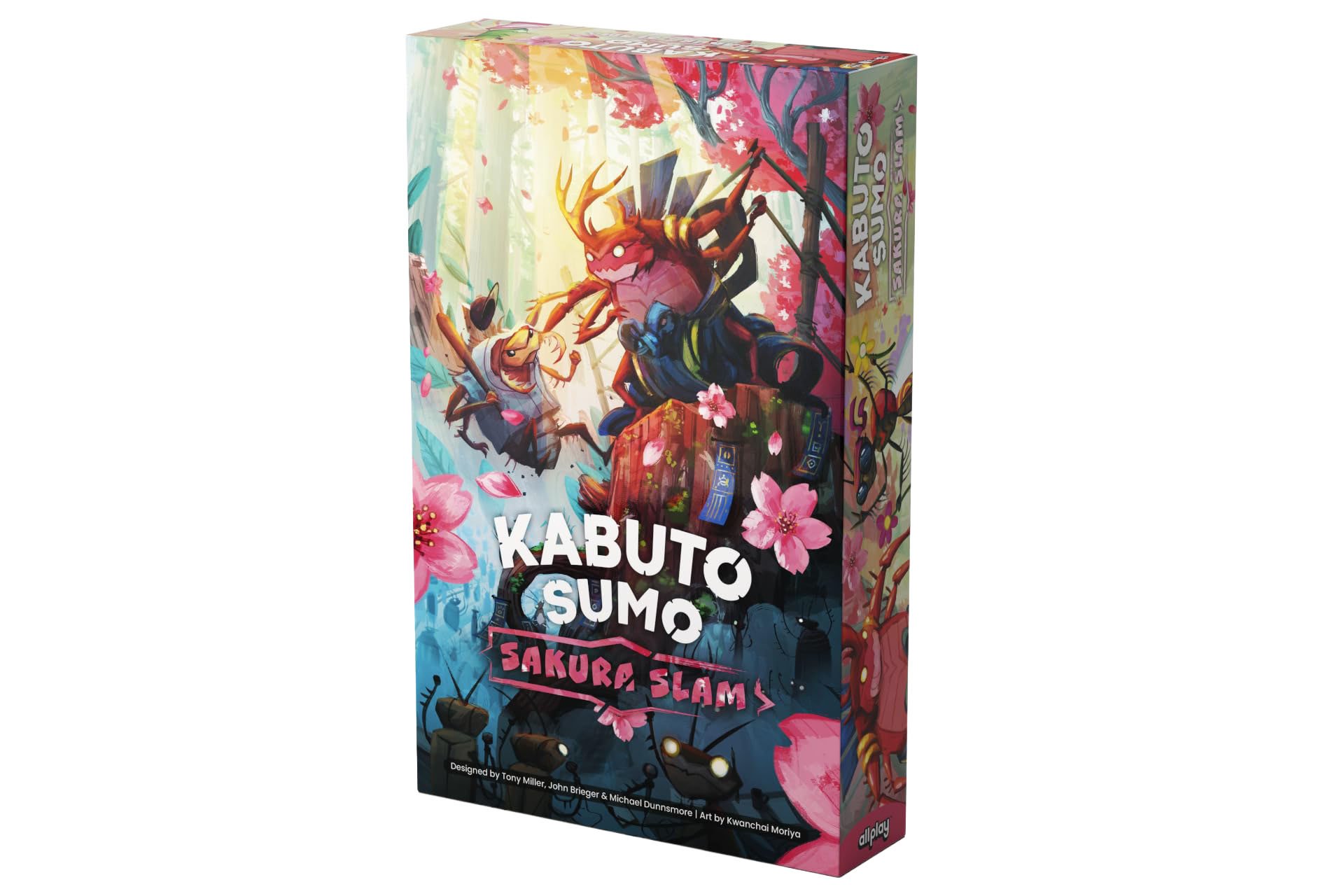
Sometimes, you just need a game so tactile, it makes you happy just by picking up a wooden disc. Kabuto Sumo: Sakura Slam is a so-called “dexterity game” that involves simply pushing small tokens onto a board to topple your opponent players’ pieces. Each player picks from one of several odd and charming bug-like characters with wrestler names, like the bat-wielding “Great Bugbino” and “Queen Bee,” which all come with their own special ability and oddly shaped wooden tiles. Then, the rest of the game relies on how fast and in what direction you move your pieces onto the board. It’s intuitive right from the get-go, and it means practically any person of any age can play.
This is one of those games I recommend to most people who may not be all that interested in board games in the first place. You don’t have to complete much complex math, but it still requires a fair bit of critical thinking and high-risk, high-reward play.
1. Mythic Bastionland
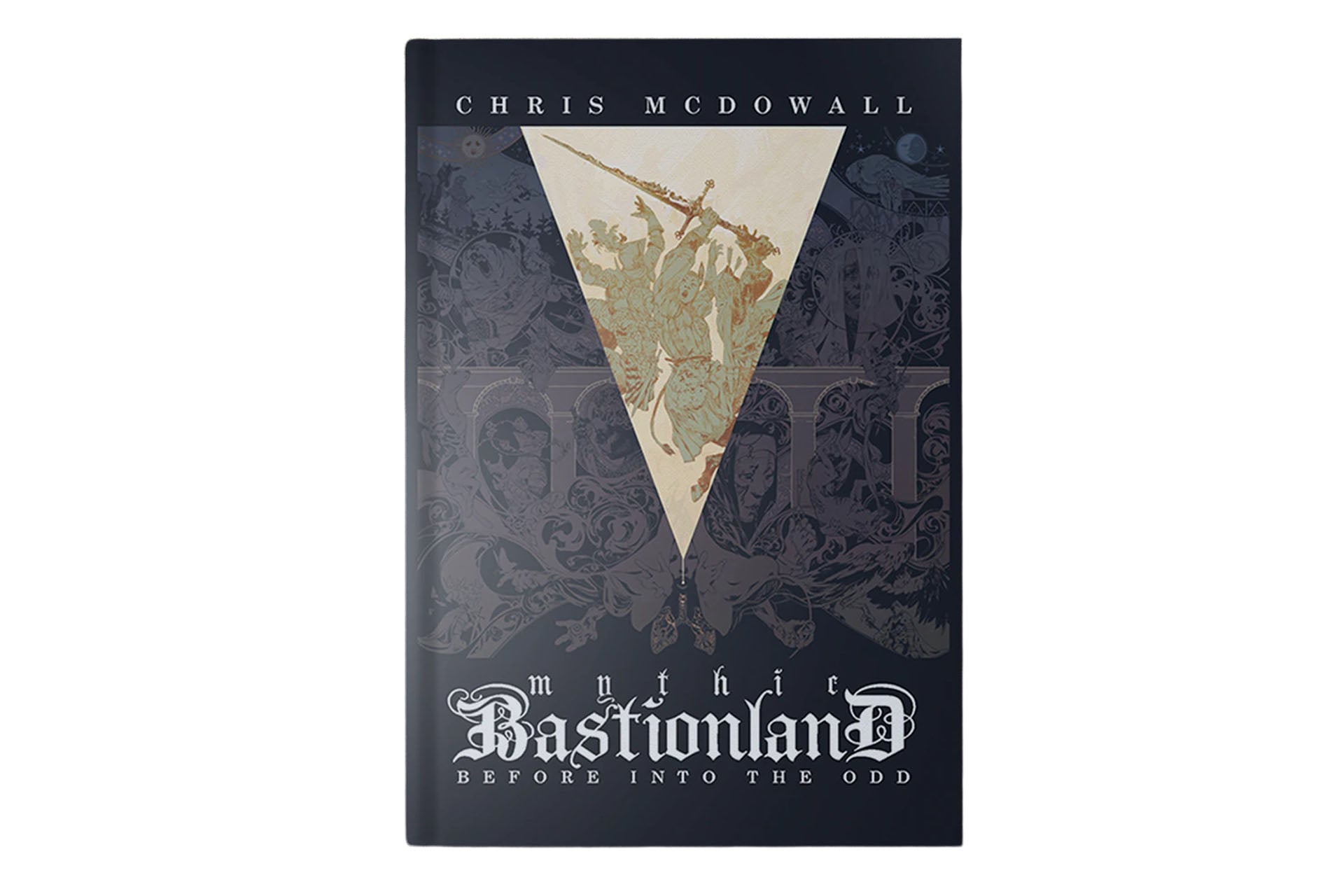
There are few roleplaying games that make me hungry to play like Mythic Bastionland. It’s a game set in an apocryphal time before recorded history, of a kind of Arthurian legend in the making, but so much darker because of it. Players take on the role of knights, though rarely will you have the option of making a character bedecked in shining plate armor. Your character may be The Moss Knight covered or The Barbed Knight bedecked in angry spikes. You’re still asked to go on quests of renown for your liege lord, but the glory you may receive is often decided by harsh and bloody combat. It’s a game about exploration, adventure, and legacy. Your characters age throughout the myths you create, and just like in real life, age doesn’t necessarily lead to wisdom.
Mythic Bastionland is the type of game that will require a lot of work upfront to get the game running, but the rules are simple enough you can simply rely on your players’ interactions to keep the story moving. Designer Chris McDowell has crafted one of the most interesting games in the indie RPG space, and there’s a reason people are still talking about it.
Read the full article here