

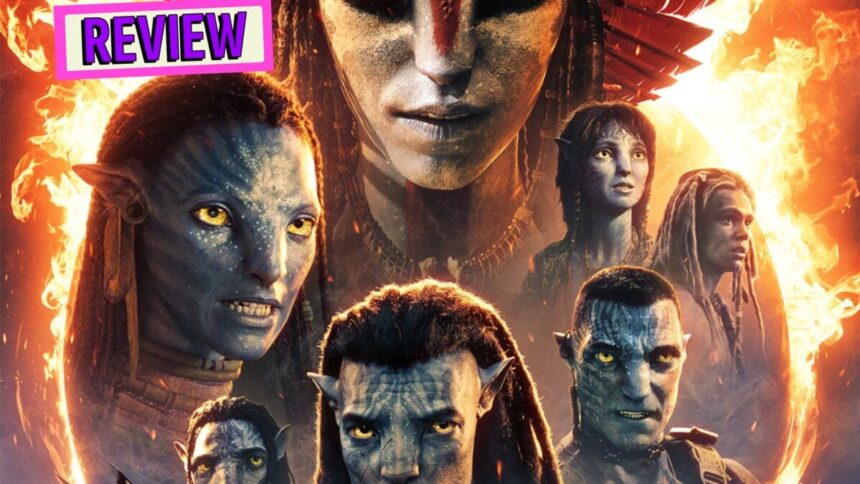
Avatar: Fire and Ash is insane. There’s just no clearer way to say it. It’s a film that’s so full of story, so packed with meaning, and so wildly over the top in the ways it conveys those things, you can’t believe it actually exists. There are moments watching it when you might have to pinch yourself as a reminder that a) this is actually happening and b) you are completely transfixed by it. And then, just when you think it can’t get any bigger or wilder? It does just that.
All of which we consider an incredibly high compliment. It has to be. James Cameron’s almost ludicrous ambition and scope cover a few pretty glaring issues that, in the hands of another filmmaker, may have really hurt the film. And yet, what Cameron achieves here is so completely jaw-dropping that you will forgive all of the bumps he has to cross to get there.
Picking up mere moments after the end of 2022’s Avatar: The Way of Water, Fire and Ash tells the continued adventures of the Sully clan. You know, the forest-dwelling Na’vi family whose patriarch was formerly a disabled U.S. military veteran who flew trillions of miles into space, fell in love, transferred his consciousness into an Avatar, and then became one of his new people’s greatest warriors ever before being forced to adopt a water culture to keep his growing family safe.
Yes, by the time Fire and Ash picks up, there is a lot to remember about Cameron’s previous two films, and there is no time to catch up. Pretty quickly, the Sullys make a key family decision and go on an adventure, only to be ambushed by the Fire Clan and separated to different parts of Pandora. And that’s the first 20 or so minutes.
With so much story to tell, Avatar: Fire and Ash can often feel disjointed. As it jumps from character to character, story to story, there are stretches where the balance doesn’t feel quite right, and it’s noticeable. You’ll be watching the Sully kids for what feels like forever before wondering, “Wait, what’s going on with their parents?” Only to not find out for another long stretch of time.
It’s also noticeable, especially if you’ve recently rewatched the last two films, how Cameron on several occasions repeats himself both with set pieces and larger story beats. We’ve seen these characters dart and dash underwater. We’ve watched them fly through the air, fighting the evil poachers. We’ve seen those two characters fight already. And that can be frustrating. For all the imagination on screen, you think, “Really? It’s just this again?”
But James Cameron isn’t dumb, and he’s certainly not lazy. So, what you realize after being mildly annoyed by the repetition is that Fire and Ash is just setting you up. Lulling you in with familiarity only to pull the rug out from under you. Because even if we’ve seen the Na’vi fight the Sky People or the Tulkun fly out of the water, Cameron eventually turns it on its head. The scenes get bigger. Have stronger implications. And, eventually, build to conclusions and reactions that are much more powerful.
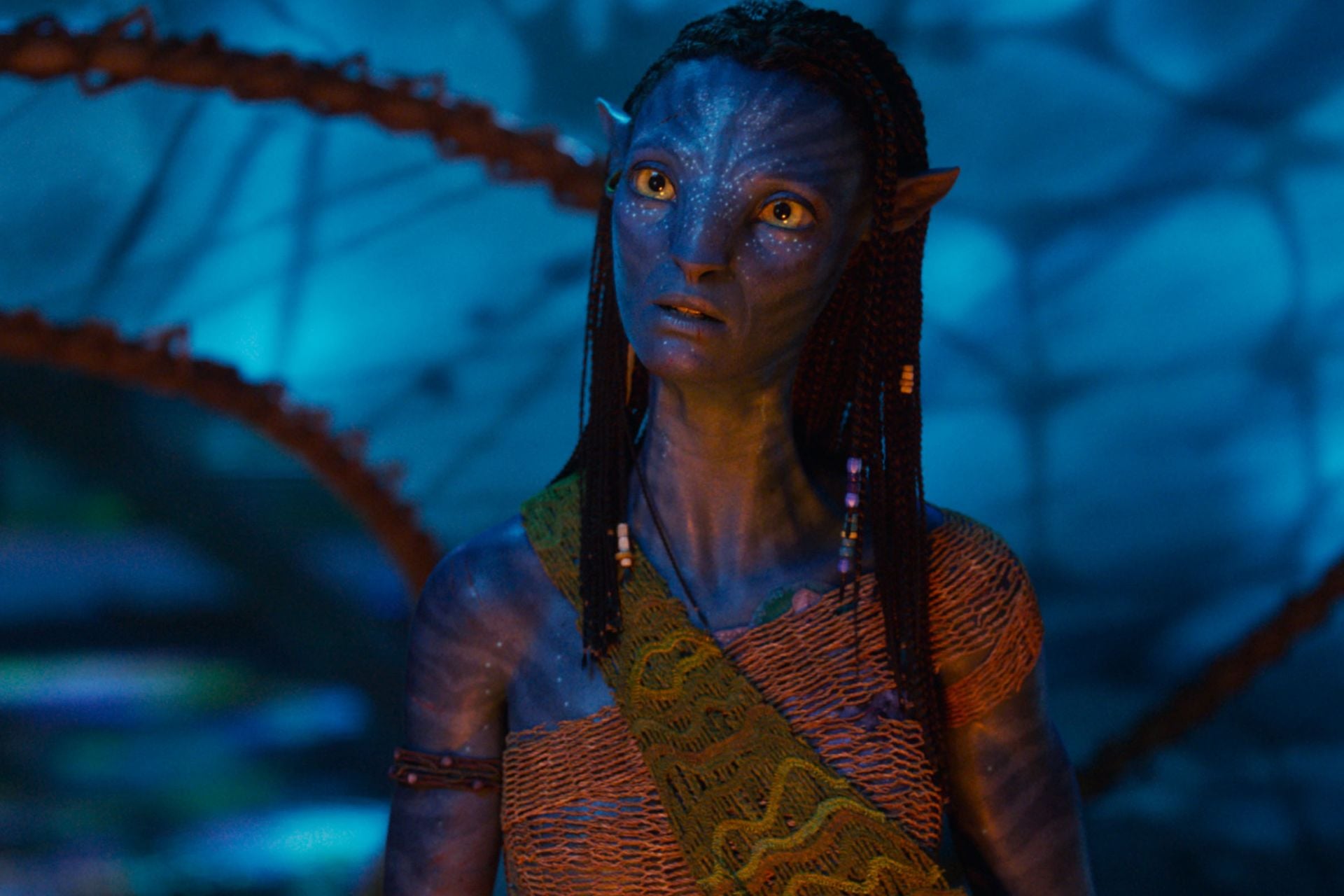
Case in point is Miles Quaritch, played by Stephen Lang. He’s the main antagonist in this film, just as he has been in the previous films, and at the start, is basically on the exact same mission he was throughout the entire last movie. But, eventually, he recruits the Fire Clan, who set this whole story off in the first place. That means, for the first time, we get to see our Na’vi heroes fight not just humans but also other Na’vi, and that really ups the stakes. It also helps that the leader of the Fire Clan, Verona (Oona Chaplin), is this sensual, evocative, witch-like being that doesn’t just cast a spell on Quaritch but on us too. She steals the movie, which is not easy to do.
Fire and Ash also digs deeper into all the different emotional pockets. Romances that were hinted at in the previous film get to blossom more here. And the characters, having gone through such traumatic events, turn to some dark places. You might not believe it, but Fire and Ash has scenes that deal with suicide, capital punishment, gun control, drug hallucinations, and even filicide. Yeah, it goes there.
Eventually, those emotions, dark themes, heroic ambitions, new allies, enemies, and more all build to a climactic final battle that continually ups the ante, ultimately becoming even more epic than everything that came before it.
Lots of that is because Cameron does all of this with some of the most impressive visual effects ever put on screen. The Na’vi are as striking and evocative as ever, interacting with all manner of new creatures, technology, flora, and more. Then, of course, by nature of everything that’s happening, there have to be more of them doing more complex things, and it’s a sight to behold.
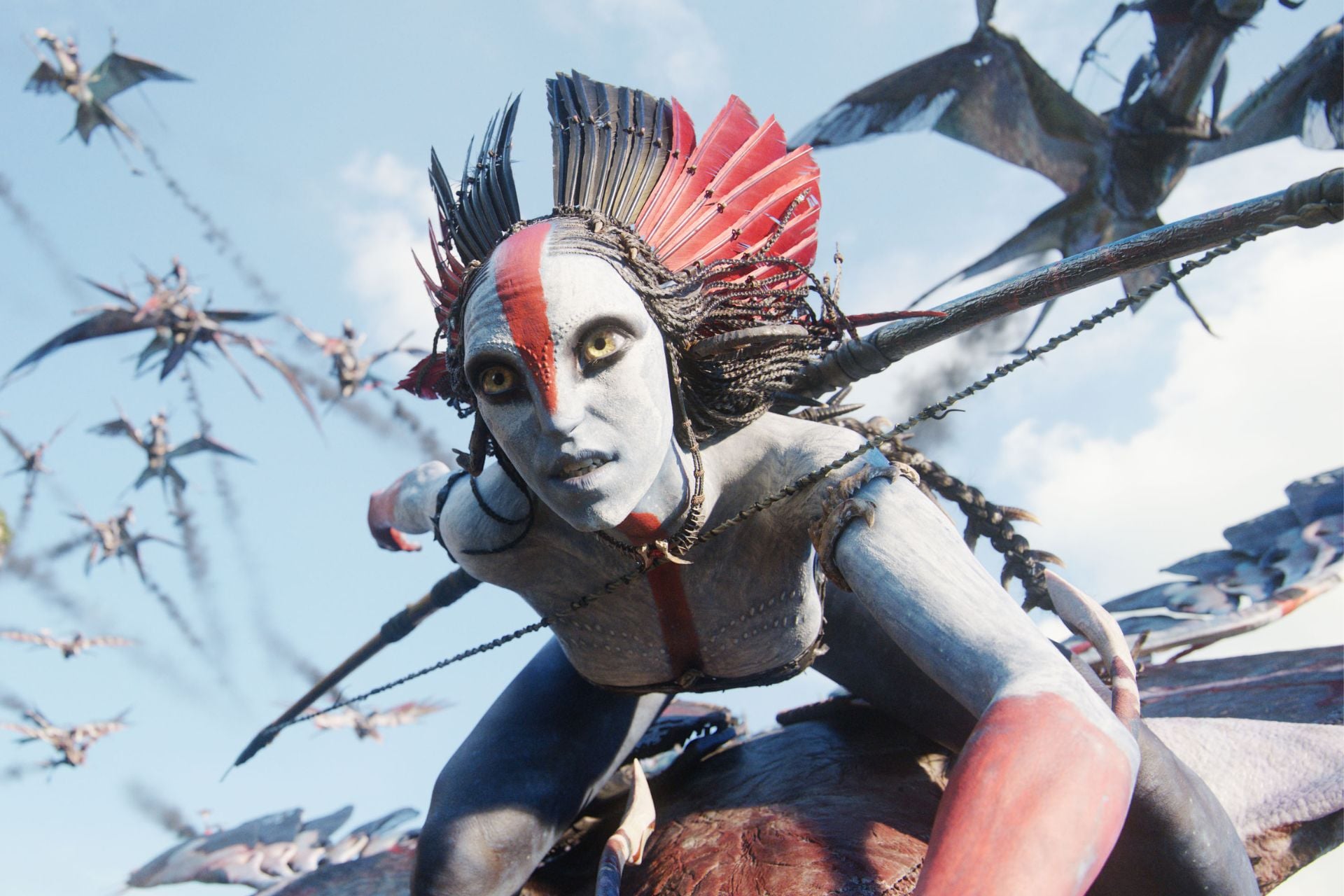
Also, the performances from top to bottom ring true right through those visual effects. By this time, you know if you are into these characters or not. If you’re not, that’s fine; the movie was never going to work for you. But if you are, the effects all but melt away, and we see the strain, pain, and struggle of Sam Worthington, Zoe Saldaña, Sigourney Weaver, and the rest, almost as if they weren’t nine feet tall and blue. They’re what make not just Avatar: Fire and Ash, but the whole franchise, work. We care about what’s happening to each and every one of them, and they give the performances to warrant it.
When you think about Avatar: Fire and Ash as a whole, you realize it’s basically three movies in one. Twice during the film, Cameron builds an arc to a place that feels like an ending, so he fades to black, only for it to continue and happen again and again. Those moments give you a quick breather but also a second to think, “How is this still going?”
It’s a lot, which is why we think it’s safe to say Avatar: Fire and Ash is probably the “worst” of the Avatar films. It’s simply more of a meal than the rest, which makes it less focused. But, again, it had to be. It’s the culmination of every story set up over the past two movies, which have taken almost 20 years to get here. And so, if you’re in any way a fan of this franchise, you’re okay sacrificing some of that super-tight cohesion in exchange for grandeur, audacity, and insanity. We’re lucky to be living in a world where this movie exists because, warts and all, it’s proof positive that big, blockbuster, commercial cinema can still be a work of art.
Avatar: Fire and Ash opens December 19.
Want more io9 news? Check out when to expect the latest Marvel, Star Wars, and Star Trek releases, what’s next for the DC Universe on film and TV, and everything you need to know about the future of Doctor Who.
Read the full article here