Encyclopedia Britannica wants ChatGPT to stop copying its work.
The publisher of the world’s longest-running English-language encyclopedia, along with its subsidiary Merriam-Webster, is suing OpenAI, accusing the company behind ChatGPT of copyright infringement.
Britannica filed the lawsuit in federal court in Manhattan on Friday. The complaint alleges that OpenAI and its AI products are free-riding on the encyclopedia’s and dictionary’s “trusted, high-quality content” while cannibalizing traffic to their websites.
Britannica claims that OpenAI pilfered its content, including nearly 100,000 online articles, to train its AI models and generate answers that “copy or mimic, sometimes verbatim,” its material. The company also takes issue with instances where the chatbot attributes AI hallucinations to Britannica.
The encyclopedia is seeking damages and restitution of profits, and is asking the court to stop OpenAI from engaging in the alleged unlawful conduct.
This is far from the first copyright fight OpenAI has found itself in. The company is already facing similar lawsuits from media outlets, including The New York Times, The Intercept, and U.S. News & World Report. Its rival, Anthropic, also recently settled a case with several authors and publishers over the alleged use of 7 million pirated books, reportedly for $1.5 billion.
And Britannica isn’t new to squaring off with AI companies in the courtroom either. The publisher also sued Perplexity in September over similar copyright claims.
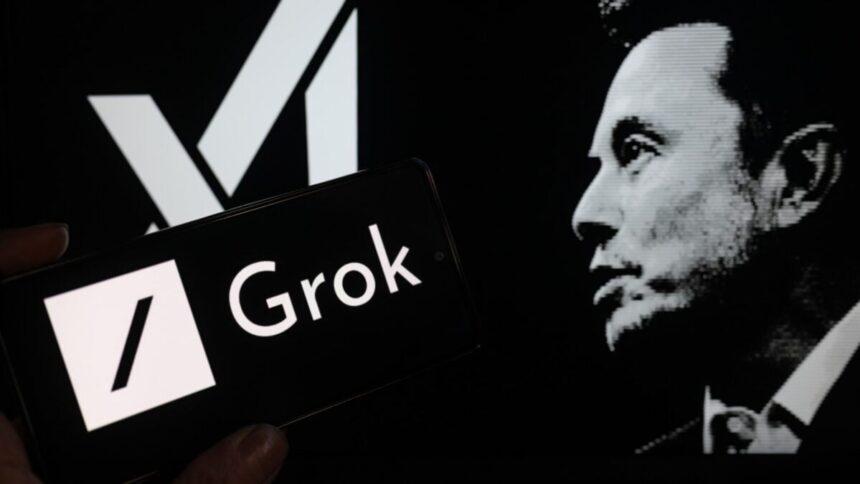
So it’s a bit puzzling how Elon Musk’s Grok and its online encyclopedia, Grokpedia, have so far avoided the kind of legal scrutiny facing other AI companies.
Musk launched Grokipedia last October as an alternative to Wikipedia. In a post in September, Musk said Grokipedia would be “a massive improvement over Wikipedia.” He has also repeatedly mocked the online encyclopedia as “Wokipedia,” arguing that there is no major alternative that reflects right-wingers’ version of reality.
His solution was to create a new platform where articles are generated by AI. Much of Grokpedia’s content appears to draw heavily from (or outright clone) Wikipedia, though often with framing that tilts toward Musk’s political views.
So far, Grok’s parent company, xAI, has faced more legal trouble over sexualized deepfakes than copyright claims. But the issue may not be far behind. Some authors, including New York Times reporter John Carreyrou, filed a lawsuit in December against xAI alongside Anthropic, OpenAI, Meta, and Google, alleging the companies used their books without permission to train AI models.
For its part, xAI tried to block a California law that would require AI companies to disclose information about the data used to train their models, arguing the requirement violates free speech. A judge recently declined to side with the company.
It seems like Musk isn’t too keen to reveal Grok’s data sources and potentially open the company up to even more lawsuits.
The reality is that xAI is a fairly new competitor in the AI landscape, having been founded in 2023. OpenAI has had an extra eight years to earn all that litigation. So, just give Grok some time. It’ll catch up.
Read the full article here