By using this site, you agree to the Privacy Policy and Terms of Use.
Accept
Tech Consumer JournalTech Consumer JournalTech Consumer Journal
  • News
  • Phones
  • Tablets
  • Wearable
  • Home Tech
  • Streaming
Reading: Earth’s Getting Blasted by the Largest Solar Radiation Storm in Over 20 Years
Share
Sign In
Notification Show More
Font ResizerAa
Tech Consumer JournalTech Consumer Journal
Font ResizerAa
  • News
  • Phones
  • Tablets
  • Wearable
  • Home Tech
  • Streaming
Search
  • News
  • Phones
  • Tablets
  • Wearable
  • Home Tech
  • Streaming
Have an existing account? Sign In
Follow US
  • Contact
  • Blog
  • Complaint
  • Advertise
© 2022 Foxiz News Network. Ruby Design Company. All Rights Reserved.
Tech Consumer Journal > News > Earth’s Getting Blasted by the Largest Solar Radiation Storm in Over 20 Years
News

Earth’s Getting Blasted by the Largest Solar Radiation Storm in Over 20 Years

News Room
Last updated: January 20, 2026 6:24 pm
News Room
Share
SHARE

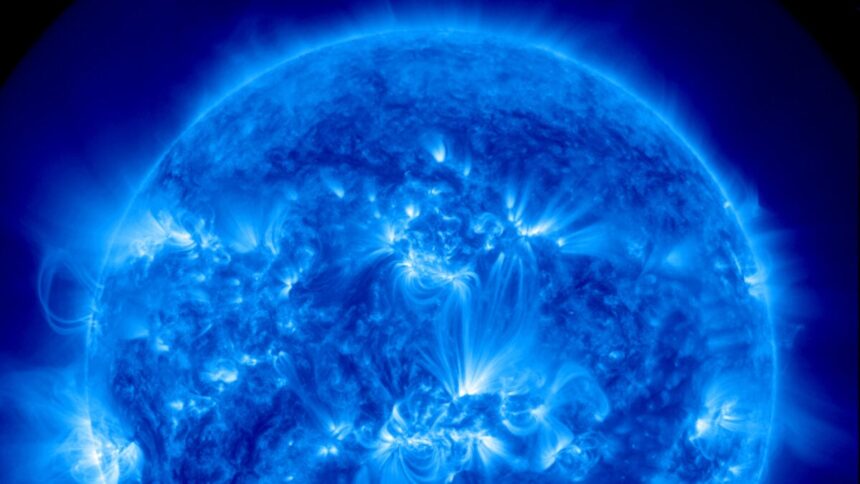
The Sun released a slew of fast-moving, intense charged particles in Earth’s direction, resulting in the largest solar radiation storm to hit our planet since 2003.

The National Oceanic and Atmospheric Administration’s Space Weather Prediction Center (SWPC) is actively monitoring the severe solar radiation storm. Charged particles, released by the Sun, reached Earth on Monday, resulting in a solar storm ranked 4 out of 5 on a severity scale.

“An S4 severe solar radiation storm is now in progress—this is the largest solar radiation storm in over 20 years,” SWPC declared on X. The storm is still ongoing, with a potential impact on space launches, satellite operations, and aviation.

Storm watch

A solar radiation storm occurs when the Sun releases a barrage of charged particles aimed at Earth. These particles are accelerated by processes at or near the Sun and travel at exceptional speeds. If enough of them reach Earth at once, a solar radiation storm results.

Once those particles reach Earth, they increase radiation exposure risks for astronauts in orbit and for passengers on commercial flights traveling polar routes. S4-magnitude storms can last for days, though they typically weaken over time.

© NOAA

Solar radiation storms of this strength are rare, according to SWPC. The last time an S4 solar storm struck Earth was in October 2003, resulting in power outages in Sweden and damage to power transformers in South Africa.

SWPC will continue to monitor the storm to keep NASA, the Federal Aviation Administration, and other agencies informed of potential risks. During periods of increased radiation risk, astronauts aboard the International Space Station are instructed to stay in better-shielded areas of the spacecraft.

Wild star

The Sun is having quite the week. On Monday, a severe geomagnetic storm also reached Earth, resulting in stunning displays of aurorae across the skies from Germany to the southwestern United States.

Unlike a solar radiation storm, a geomagnetic storm is triggered by the arrival of a coronal mass ejection (CME)—a violent eruption of plasma from the Sun. The most recent storm was triggered by a CME that struck Earth’s magnetic field at 2:38 p.m. ET on January 19. Storm conditions reached a level of G4 in severity.

Our host star goes through an 11-year cycle, varying in the intensity of its activity. The Sun is currently experiencing solar maximum, a period marked by an increased number of CMEs, solar flares, and charged particles erupting from the star.

On May 10, 2024, a G5, or extreme geomagnetic storm, struck Earth as a result of large expulsions of plasma from the Sun’s corona. The G5 storm affected Earth’s power grid while stirring up some spectacular auroras seen across much of the globe. The storm also increased atmospheric density in low Earth orbit by up to an order of magnitude, which in turn caused atmospheric drag that affected satellites.

Read the full article here

You Might Also Like

DOGE Goons May Have Shared Stolen Social Security Data With Political Group: Report

Sphere’s ‘Wizard of Oz’ Re-Release Was One of 2025’s Highest Grossing Films—for One Big Reason

I Can’t Believe This Is What Is Getting Right Wing Weirdos Mad About ‘Starfleet Academy’

Palantir CEO Says AI Will Somehow Be So Great That People Will Stop Immigrating

The Sphere Could be Headed to Your City (With a Smaller Footprint)

Share This Article
Facebook Twitter Copy Link Print
Previous Article Pivoting to Smart Glasses Is Getting Out of Hand
Next Article Even George R.R. Martin Was Surprised by That Poop Scene in ‘A Knight of the Seven Kingdoms’
Leave a comment

Leave a Reply Cancel reply

Your email address will not be published. Required fields are marked *

Stay Connected

248.1kLike
69.1kFollow
134kPin
54.3kFollow

Latest News

Controversial Swiss Suicide Pod Gets an AI-Powered Mental Fitness Upgrade
News
Even George R.R. Martin Was Surprised by That Poop Scene in ‘A Knight of the Seven Kingdoms’
News
Pivoting to Smart Glasses Is Getting Out of Hand
News
Elon Musk Jumps Into the Race to Replace Mitch McConnell
News
British Sci-Fi Legend ‘Blake’s 7’ Might Get the Reboot Treatment
News
NYSE’s Tokenized Stocks Create More Questions for Crypto’s Relevance
News
Cryptocurrencies Are Dying in Record Numbers, Report Says
News
Which Wild Animals Could Humans Domesticate Into the Next Great Pet?
News

You Might also Like

News

OpenAI Says Its Physical Device Is ‘On Track’ for an Unveiling Later This Year

News Room News Room 3 Min Read
News

The Fight for Warner Bros. Is Paramount’s Most Embarrassing Moment Yet

News Room News Room 6 Min Read
News

Sony’s PlayStation Store Removes ~150 Shovelware Titles by a Single Developer

News Room News Room 4 Min Read
Tech Consumer JournalTech Consumer Journal
Follow US
2024 © Prices.com LLC. All Rights Reserved.
  • Privacy Policy
  • Terms of use
  • For Advertisers
  • Contact
Welcome Back!

Sign in to your account

Username or Email Address
Password

Lost your password?