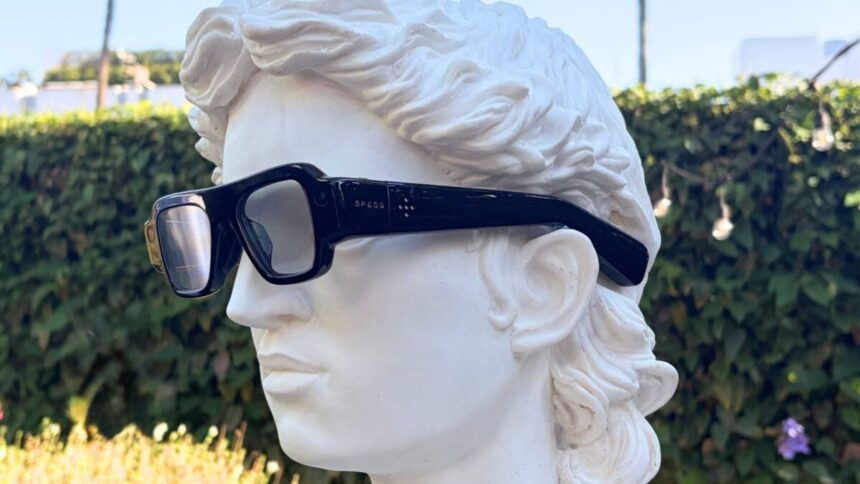
I had a lot of questions when Snap annouced its Specs glasses in June, but one of the most crucial wasn’t necessarily about technology; it was about anatomy. What I wanted—nay, needed—to know was whether they really bend the sh*t out of your ears.
You see, Snap’s Specs went straight from being announced to getting roasted, and a lot of the, um, feedback was centered on how they initially appeared to bend the ears of Snap CEO Evan Spiegel. As it turns out, Spiegel’s ears probably just look like that all the time, but the questions still lingered in my mind and in my cochlea to an extent.
Luckily, since I had the chance to attend Snap’s launch event and try its Specs AR glasses for myself, I was able to explore that anatomical mystery in a big, chunky, comically large, kind of way.
The first case study: me. Here’s the thing: the Snap Specs are large. There’s no way of getting around that. I still think they’re small when you consider the fact that they cram in the ability to do Meta Quest-like stuff—lighter mixed reality experiences. But when you compare them to what most people are going to compare them to—glasses—they’re filed under “c” for “chunky.”
As you can see, they don’t really bend my ears down, though I’d be lying if I said I didn’t feel the weight in my (albeit limited) hands-on time. In my own personal experience, Snap Specs are weighty but not ear-bendy.
So, case closed, right? Not quite yet. Ears are different on different people, and just because they didn’t bend my ears doesn’t mean they don’t bend ears, period. So, I canvassed the crowd for this one, and with the permission of the poor souls in the post, I dug a little deeper into eargate to conduct the kind of journalism that nobody asked for. Or should I say… Jearnalism.


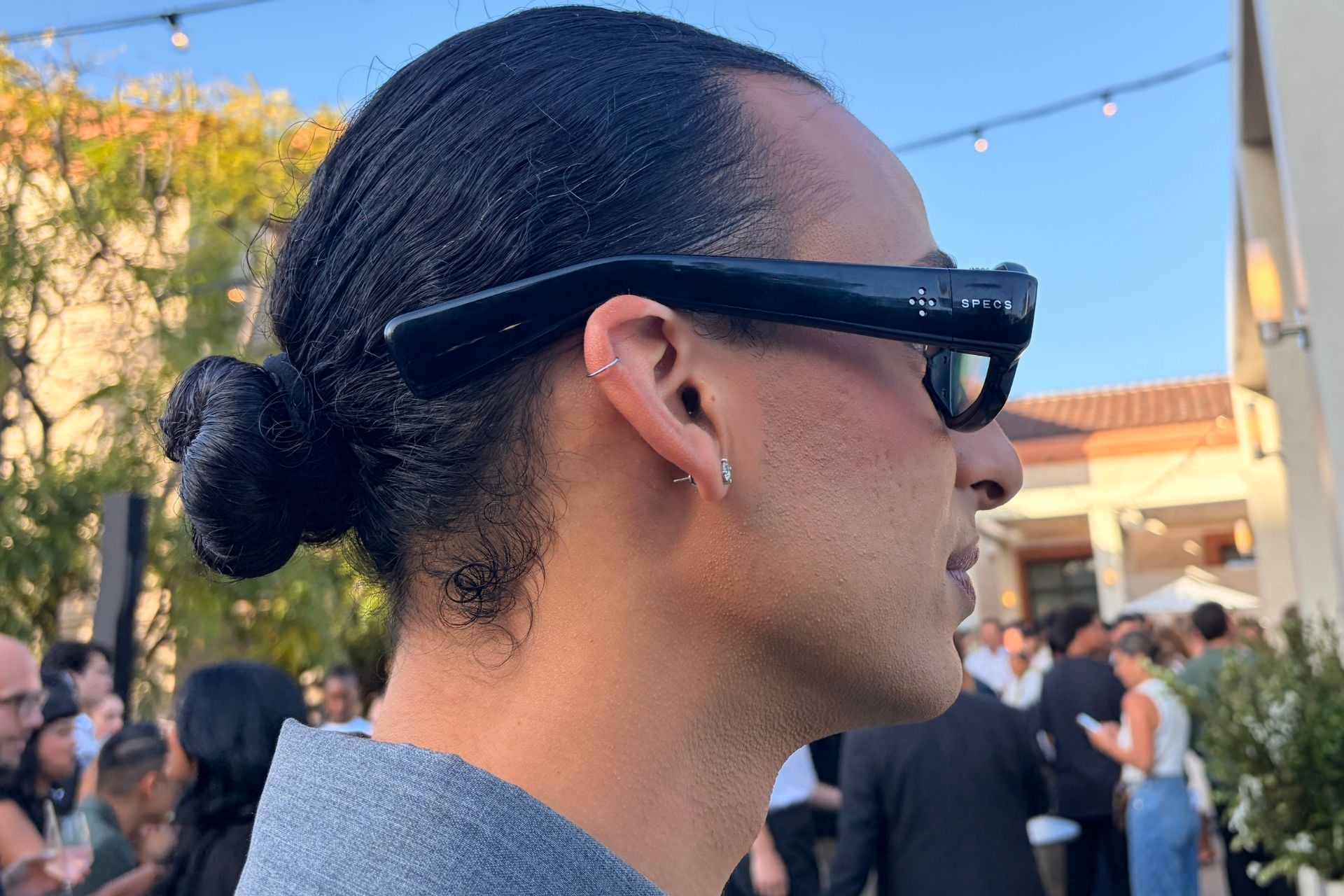
As you can see, there’s not much bendage, though I did observe some people with long hair who looked a little silly with arms jutting out from behind their locks. Though, if you have long hair and you wear it down, there’s a chance that you might not even see the arms or your ears at all, which is probably the ideal situation. Anecdotally, I saw dozens of people wearing Specs with my own eyes, and I didn’t feel the need to call the ear police to report an incident.
Still, even with this boots-on-the-ground approach, I needed more, so I also asked Snap itself about the ears of it all, and they were also attuned to your sh*tposting, apparently.
“Yeah, we saw the memes, too,” Ben Feuerstein, Head of Specs Studio, told Gizmodo. “There are a lot of good memes out there.”
I asked Feuerstein about ears for a couple of reasons. First reason: it was a funny thing to ask. And second: there is actually something to unpack here. AR glasses are a very new category, and Snap’s Specs, whether you think they’re the bona fide face-computer future or a sideshow in a misguided technotopic race to nowhere, are very ambitious. Snap has built a standalone face computer that doesn’t rely on your phone, and the constraints of that endeavor are voluminous.

Arguably the biggest challenge is miniaturization, which is to say, shrinking down the abilities of a big-ass, monster truck-ass VR headset into a glasses form factor that you’d feel comfortable wearing to church.
In this way, the ears aren’t just a meme; they’re a real (and really silly) representation of just how difficult all of this really is. What Snap is trying to do isn’t easy, but it’s also not, not funny, either. Snap, at least, seems to be realistic about what it’s doing here, though it would prefer if you didn’t judge a pair of AR glasses by their chunky exterior before trying a pair for yourself.
“Look, we get it. It’s new technology; people are going to have a reaction to it. We are trying to do something that is incredibly different. And specs look different because they are different,” Feuerstein said. “It’s one thing to just see the glasses online or wherever you do, but to actually try them and start understanding what you see when you actually are looking through the glasses. That changes a lot.”
Read the full article here