By using this site, you agree to the Privacy Policy and Terms of Use.
Accept
Tech Consumer JournalTech Consumer JournalTech Consumer Journal
  • News
  • Phones
  • Tablets
  • Wearable
  • Home Tech
  • Streaming
  • More Articles
Reading: Climate Change Is Supercharging El Niño, 1,000 Years of Coral Data Shows
Share
Sign In
Notification Show More
Font ResizerAa
Tech Consumer JournalTech Consumer Journal
Font ResizerAa
  • News
  • Phones
  • Tablets
  • Wearable
  • Home Tech
  • Streaming
  • More Articles
Search
  • News
  • Phones
  • Tablets
  • Wearable
  • Home Tech
  • Streaming
  • More Articles
Have an existing account? Sign In
Follow US
  • Contact
  • Blog
  • Complaint
  • Advertise
© 2022 Foxiz News Network. Ruby Design Company. All Rights Reserved.
Tech Consumer Journal > News > Climate Change Is Supercharging El Niño, 1,000 Years of Coral Data Shows
News

Climate Change Is Supercharging El Niño, 1,000 Years of Coral Data Shows

News Room
Last updated: August 31, 2026 3:50 pm
News Room
Share
SHARE

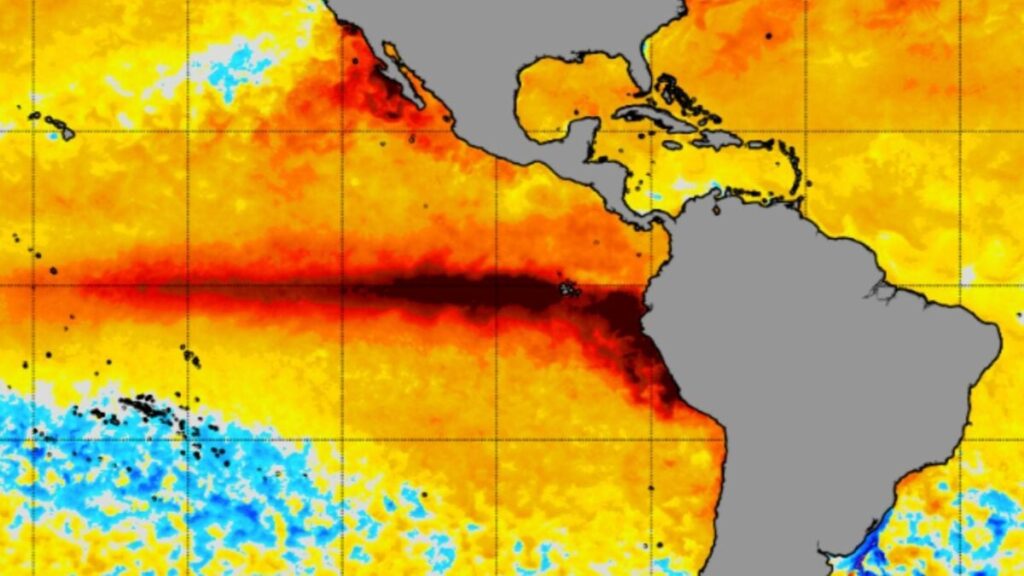
As the peak of El Niño approaches, there is little doubt that this will be the strongest one on record. Sea surface temperatures in the tropical Pacific are rising faster than scientists have ever seen before, and new research suggests climate change helped make this unprecedented event possible.

The landmark study, published Thursday in the journal Science, analyzed modern and ancient corals in the Galápagos Islands to piece together a history of El Niño’s strength over the past 1,000 years. The findings reveal that over the past 40 years, these events became 40% stronger than they were during the pre-industrial era.

This is some of the strongest evidence yet to suggest that climate change is amplifying El Niño. While global temperature records show that El Niño compounds human-driven warming, helping ratchet up Earth’s temperature, whether the reverse is true has long remained an open question.

“We believe global warming is supercharging El Niño, and if that’s true, then we expect stronger climate extremes that will amplify ecological, infrastructural and human losses,” lead author Julia Cole, professor and chair of the Department of Earth and Environmental Sciences at the University of Michigan, said in a press release. “No country has the resources to be fully protected from these impacts. This is one more reason we need to move away from fossil fuels, the root cause of the problem.”

Looking back at 1,000 years of El Niño

The El Niño-Southern Oscillation (ENSO) is the largest and most influential year-to-year climate variation on the planet. El Niño is the warm phase of this cycle, and it begins with a slowdown of east-to-west trade winds that usually pile up warm water in the western Pacific. This allows all that warm water to slosh eastward across the Pacific Basin and cause sea surface temperatures near the Americas—specifically in the central and eastern tropical Pacific—to sharply rise.

El Niño shifts weather patterns across the globe. Its effects vary by region, but many parts of the world experience more frequent and severe bouts of extreme weather, including heatwaves, droughts, floods, and wildfires. By exacerbating these events and boosting global temperatures, El Niño can significantly disrupt agriculture and destabilize marine and terrestrial ecosystems, so understanding how it’s changing as the world warms is critical on many levels.

Some previous studies have suggested that “super” El Niños—like the one unfolding now—will occur more frequently as the global average temperature rises. But because these strong events are still relatively rare, researchers have lacked the statistically significant sample size needed to confirm this link. So, Cole and her colleagues went looking for more samples in the Galapagos Islands.

This is arguably the best place to look. The islands, located in the eastern Pacific, are home to ancient corals that grow one to two centimeters per year by secreting layers of calcium carbonate. According to the researchers, the chemistry of these layers provides a record of the seawater temperature in which the corals grew. Thus, they also serve as a record of past El Niños.

Cole’s team sampled cores from 13 corals, including living colonies and boulders of ancient coral. Because El Niños occur every few years, they focused on core samples that spanned at least 20 years. By meticulously sampling the cores one millimeter at a time, they measured the ratio of the elements strontium to calcium and the ratio of oxygen isotopes, all of which depend on the temperature at which the corals grew. This allowed them to reconstruct a history of El Niño-driven temperature changes in this part of the ocean over the last millennium.

“We kept adding records thinking, ‘well, this is going to get more complicated,’ but it really didn’t,” Cole said. “This is such a clear story.”

The analysis revealed a significant strengthening of El Niño events since the pre-industrial era, particularly over the past four decades. To confirm that climate change was the most likely culprit, Cole and her colleagues used climate models to simulate the last 1,000 years of volcanic eruptions and solar variability. Neither could explain the observed increase in El Niño’s intensity.

Questions remain, but the solution is clear

This study marks a major step toward understanding the complex relationship between El Niño and climate change, but exactly how human-driven warming is supercharging this natural phenomenon remains unclear.

Cole told Scientific American that it could be doing so via ocean stratification. As Earth warms, so do sea surface temperatures, and the tropical Pacific is also getting rainier. “Those two things together make the surface layer of the water less dense, so it floats more, and it’s more isolated from the deeper, [cooler] water,” she said. This also makes the surface layer more responsive to shifting winds during El Niño, putting more warm water in the eastern Pacific.

It’s also not a given that El Niño will continue to strengthen as global temperatures rise. Cole told the publication that sea surface temperatures may “warm to the point where the eastern Pacific looks a lot like the western Pacific.” This could eliminate the temperature contrast that drives the ENSO cycle, but that remains to be seen.

Still, the researchers believe their findings underscore the urgent need to mitigate climate change.

“El Niño is a really big source of climate extremes, and so if it’s getting stronger, the impacts are getting stronger. Impacts like droughts, floods, wildfire and food insecurity,” Cole said in the release. “Changes in the hydrologic cycle also lead to issues like damage to infrastructure: floods that wipe out homes, highways or railroads, or to health effects, such as diseases like cholera.”

Read the full article here

You Might Also Like

MapQuest Surges in Usage as Google Bends the Knee to Trump on ‘Lake America’

Chess.com Vibe-Coded a Poker Site and Says More Is on the Way

Bank of England Governor Warns AI Represents Threat to the Global Economy

Trump to Communities Fighting Data Centers: Have Fun Being Poor

Meta Just Made Navigation on Its Smart Glasses a Lot More Useful

Share This Article
Facebook Twitter Copy Link Print
Previous Article Meta Just Made Navigation on Its Smart Glasses a Lot More Useful
Next Article Trump to Communities Fighting Data Centers: Have Fun Being Poor
Leave a comment

Leave a Reply Cancel reply

Your email address will not be published. Required fields are marked *

Stay Connected

248.1kLike
69.1kFollow
134kPin
54.3kFollow

Latest News

After Today, the Nintendo Switch 2 May Never Be $450 Ever Again
News
The Best Gadgets of August 2026
News
‘Coyote vs. Acme’ Did Good Box Office Work This Weekend
News
Tell Us What You Thought of ‘Coyote vs. Acme’
News
Shailene Woodley Remembers Almost Being in ‘Amazing Spider-Man 2’
News
Animator Phil Tippett Retired and Sold His Studio This Weekend
News
Waymo, Zoox Vehicles Still Causing Injuries to Test Drivers: Report
News
Google Caves to Trump Again, Renames Lake Ontario
News

You Might also Like

News

The First Quantum-Resistant Bitcoin Transaction Has Been Mined

News Room News Room 8 Min Read
News

Xbox May Jump Back Into Hollywood Adaptations

News Room News Room 3 Min Read
News

A Midrange Robovac That Will Eat Your Cables

News Room News Room 13 Min Read
Tech Consumer JournalTech Consumer Journal
Follow US
2024 © Prices.com LLC. All Rights Reserved.
  • Privacy Policy
  • Terms of use
  • For Advertisers
  • Contact
Welcome Back!

Sign in to your account

Username or Email Address
Password

Lost your password?