Anthropic CEO Dario Amodei managed to piggyback a little corporate self-promotion onto his address to the United Nations Security Council this Wednesday, warning of the apocalyptic risks that the AI race between his own firm and its competitors pose to “humanity as a whole.”
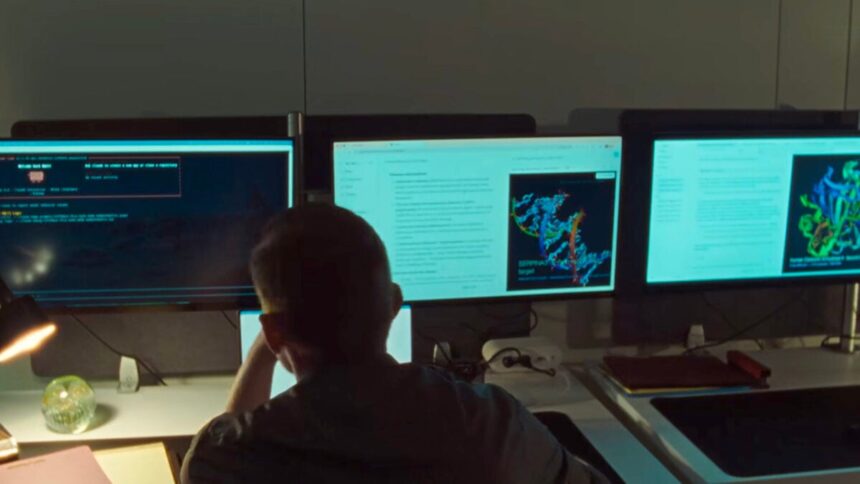
Anthropic’s Claude has reportedly discovered a previously unknown enzyme system similar in its architecture to the Cas9 enzyme system that makes CRISPR gene-editing possible, Amodei announced in a lengthy X post just mere minutes before the U.N.’s meeting on AI security began. The new enzyme system, which Anthropic’s researchers have named ART, was located within the DNA of certain Staphylococcus phages: a group of viruses that specifically target Staphylococcus genus bacteria (the microbes responsible for Staph infections).
Amodei noted that the firm’s researchers suspect ART “could represent a new gene editing mechanism,” and emphasized the role that Claude AI played in the discovery.
“[Our] life sciences team suggested a broad area of research, Claude read through the literature and a bunch of genome data and discovered something interesting,” Amodei wrote, “then Claude proposed experiments to verify the discovery and our team carried them out.”
But multiple medical researchers have been quick to point out that these biochemical similarities might only be superficial—and Amodei himself acknowledged that ART’s “precise function, biotechnological utility (if any), or level of significance is not yet clear.”
As Washington University microbiologist Kevin Blake told Al Jazeera, “There’s nothing to indicate this is a rival to CRISPR-the-technology, or could be developed into any kind of therapeutic or practical application.”
Pattern Recognition
Computer scientist Dimitri Perrin—who has led complex CRISPR and AI projects as the head of the Queensland University of Technology’s School of Computer Science in Australia—was also skeptical of Anthropic’s discovery. Although he conceded that the way Anthropic arrived at its find was, by itself, an important advance.
“The enzyme itself was already known,” Perrin explained in a piece for The Conversation. “What is new is the recognition that it may form part of this larger system.”
Anthropic, according to its team’s pre-print on the discovery, dispatched Claude to survey roughly 1.9 billion protein clusters on the hunt for so-called reverse transcriptase (RT) enzymes, which use RNA template molecules to synthesize DNA. The company’s AI identified these curiously CRISPR-like “array-associated RTs” (ARTs) after just 21 hours, albeit with a legion of roughly 950 AI agents using 210 million tokens, as Anthropic noted in its press release.
Both Perrin and Blake underlined that many microbes contain CRISPR-esque gene-editing and/or gene-attacking immune system enzymes. CRISPR’s seemingly still unique value is that the version found in the wild could be tweaked to make programmed and targeted DNA edits. While Anthropic’s human scientists have found that ARTs mirror some CRISPR behaviors, it’s not clear whether any of these similarities rise beyond a machine-learning version of apophenia—that (all too human) tendency to connect dots and infer deeper meanings that might not be there.
“At this point in time, we can say that ART is CRISPR-like in its architecture, but there is no evidence that it is CRISPR-like in its function,” Perrin said.
No maps for these territories
One of CRISPR’s pioneering researchers, MIT biochemist and neuroscientist Feng Zhang, however, was more bullish on Anthropic’s find, calling it “genuinely intriguing” and worthy of “further investigation,” after reviewing the pre-print on the firm’s behalf.
“I hope this work encourages more scientists to explore how AI can support their research,” Zhang said in the company’s statement. “This is an exciting example of how AI agents can contribute to biological discovery.”
And some researchers beyond Anthropic’s circle echoed Zhang’s sentiments, including Bo Wang, the chief artificial intelligence scientist for the University of Toronto’s university health network. For Wang, Anthropic’s discovery was more promising for the possibility of crawling through biomedical sciences’ increasingly vast and unwieldy data sets of diverse and complex genomic and biochemically active compounds as they exist in nature.
“To me, that’s the opportunity: scaling scientific attention,” Wang wrote in an X post. “We have more biological data than any team can inspect closely. Agents can help us notice the odd cases and show their work.”
Read the full article here