People around the world have been adorning their bodies with tattoos for thousands of years. While one of the most famous ancient tattoo wearers is Otzi the Iceman—the prehistoric man whose 5,300-year-old remains were discovered by tourists on the Italian-Austrian border in 1991—scholars have started to pay more attention to an ancient region on the other side of the Mediterranean.
In a study published today in the journal PNAS, researchers investigated over 1,000 human remains from the Nile River Valley, once part of ancient Nubia. Their survey revealed more tattooed individuals from the region than previously known and highlighted a change in tattooing practice aligning with Christianity’s arrival in the region.
Ancient Egyptian neighbor
Nubia is a region stretching across parts of Egypt and Sudan along the Nile River that hosted various civilizations and kingdoms throughout its long history. Perhaps the most well-known is the Nubian Kingdom of Kush, which conquered Egypt in the eighth century BCE.
Anne Austin, first author of the study and a researcher from the University of Missouri–St. Louis’s Department of History, and her colleagues studied 1,048 remains with multispectral imaging techniques, which allow researchers to search for evidence of tattooing in samples of preserved skin. The remains in question are from three archaeological sites spanning 350 BCE to 1400 CE in the Nile River Valley in modern-day Sudan, and the team’s aim was to determine the existence, spread, and demographics of tattooed people.
Christianity in Nubia
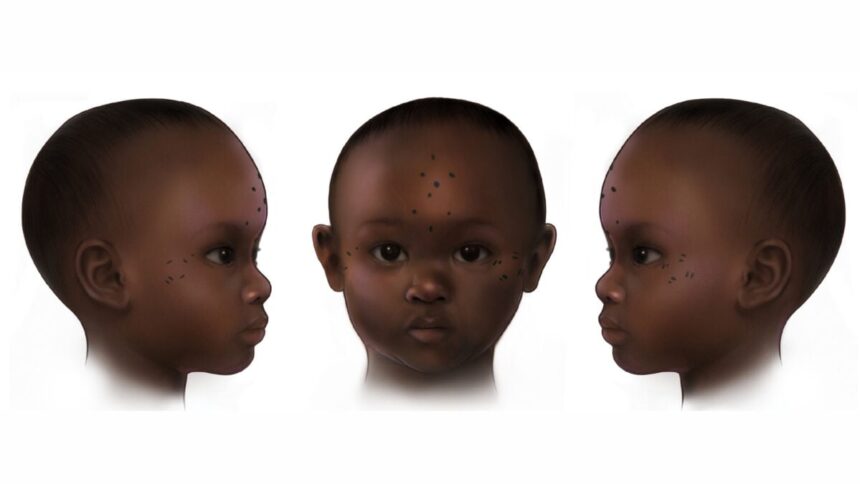
They identified tattoos on 27 people, with a significant amount in the Christian-era site of Kulubnarti, where tattooing hadn’t previously been documented. The individuals are males and females and represent a broad range of ages—from infants all the way to elderly adults. While researchers already knew that tattooing existed in ancient Nubia, especially in the Nile River Valley, the team’s work increased the number of tattooed individuals known to science in the valley by almost 100%.
The form of the markings indicates that the tattoos were created not with a needle but with a knife. What’s more, microscopic analysis of the tattoos also revealed a change in tattooing traditions during the medieval era, which is when Christianity arrived in the area. Facial tattoos replaced the pre-Christian era’s patterns of dotted diamonds throughout the body and crisscrossed designs on the hands
In the academic world, the study’s results demonstrate how multispectral methods can shed light on ancient tattooing customs. As for the rest of us, it contributes further information on the history of an art form that continues to attract people today.
Read the full article here