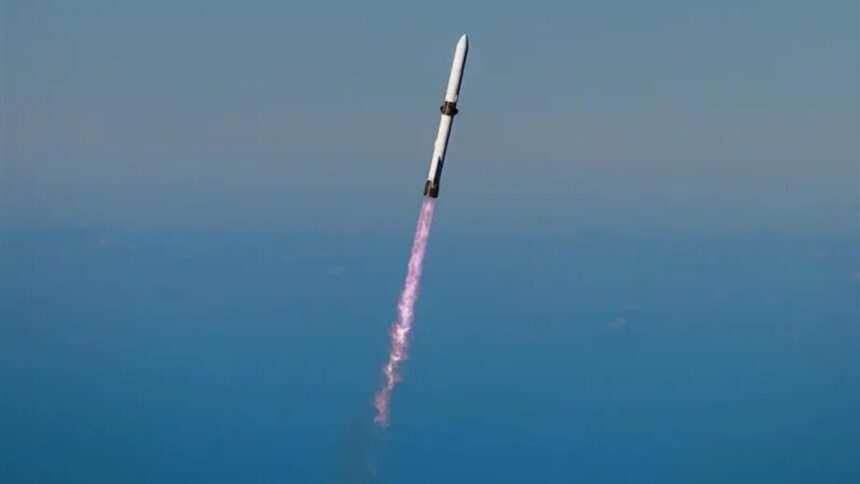
Blue Origin is gearing up for the third flight of its New Glenn rocket, launching AST SpaceMobile’s Blue Bird satellite. In a surprisingly fast move, the company plans to use the same booster that flew on the rocket’s second mission, pushing it closer to its goal of reusability.
New Glenn’s next mission, NG-3, is scheduled for no earlier than late February from Launch Complex 36 at Cape Canaveral Space Force Station, Blue Origin announced on Thursday. The NG-3 mission will use the same booster that launched NASA’s twin ESCAPADE Mars probes on November 13, 2025, the company revealed in the same announcement.
Blue Origin is refurbishing the booster, named “Never Tell Me The Odds,” to power the upcoming New Glenn mission.
Land, refurbish, reuse
Blue Origin’s NG-2 mission marked the first time the company was able to successfully land its New Glenn first stage. The company lost the booster during its first recovery attempt in January 2025, after it failed to perform a soft, controlled landing on Jacklyn—a barge in the Atlantic Ocean.
After landing its booster for the first time just 10 weeks ago, Jeff Bezos’ rocket venture is ready to send it flying once again. New Glenn’s first stage is designed for full reusability, with each booster aimed to fly at least 25 times.
Following the NG-2 launch, Blue Origin executives revealed that they were looking into reusing the same booster. “It’s kind of a toss-up, because the third booster is pretty far along in manufacturing,” Dave Limp, Blue Origin chief executive, said in an interview, according to SpaceNews.
Rocket reusability
SpaceX has been reusing its Falcon 9 rocket booster for nearly nine years. By comparison, however, Elon Musk’s rocket company didn’t opt to reuse the first booster that successfully landed following a Falcon 9 launch in 2016. Instead, the company examined the booster up close and found that it had suffered some wear and tear, likely making it difficult for successful reuse.
Blue Origin choosing to reuse the first rocket booster it successfully landed is a big gamble, but the company may be looking to close the gap with its industry rival SpaceX.
Read the full article here