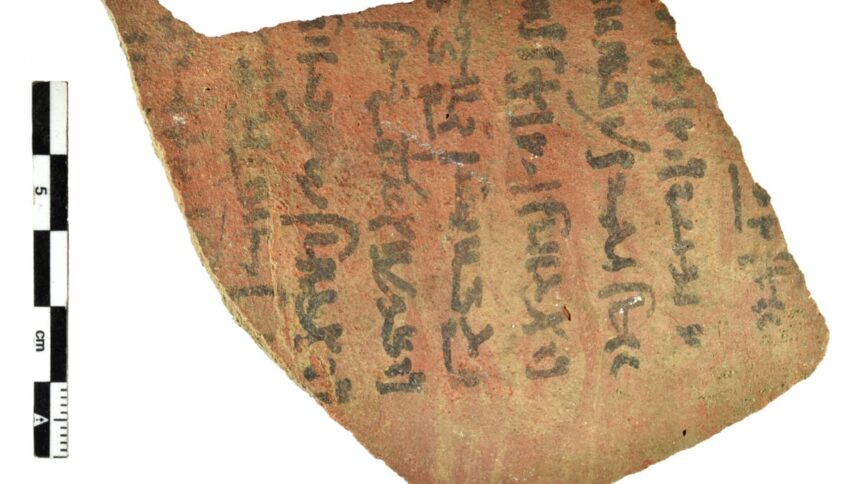
Think you’ll forget it? Write it down. Apparently, this approach for remembering grocery lists, house chores, deliveries, and the like was also a huge part of life for ancient Egyptians living over 2,000 years ago—something for which archaeologists now have the receipts, and an unprecedented amount of them at that.
In a recent press release, a joint archaeological mission by the Egyptian Ministry of Tourism and the University of Tübingen in Germany announced that between 2005 and 2026, it had recovered more than 43,000 pieces of ostraca—pottery shards or limestone flakes used by Egyptians for casual note-taking. The excavations took place in the Athribis complex, located about 6.2 miles (10 kilometers) west of the Nile River.
“The ostraca show us an astonishing variety of everyday situations,” Christian Leitz, an Egyptologist at Tübingen, said in the release. “This everyday content gives us a direct insight into the lives of the people of Athribis and makes the ostraca an important source for a comprehensive social history of the region.”
Writing is for everyone
Before paper, ancient civilizations tended to write on harder surfaces, like stone tablets, clay or wooden slabs, or, to give an odd example, ostrich egg shards. Needless to say, writing on these surfaces wouldn’t be as easy as using a ballpoint pen on standard paper.
So it might be tempting to assume that “writing stuff down” was reserved for special purposes, which was really the case for a good number of Mesopotamian cuneiforms used to record important economic, political, or religious texts. But archaeological records suggest that wasn’t always the case. For instance, some cuneiforms seem to discuss personal finances or alcohol usage at cult services, according to the Institute for the Study of Ancient Cultures.
A piece of mind
Ancient Egyptians truly took this to the next level. The ostraca fragments arguably dealt with mundane matters, such as “tax lists and deliveries… short notes about everyday activities, exercises by schoolchildren, religious texts, and priestly certificates [attesting to] the quality of sacrificial animals,” Leitz said.
The ostraca from the Athribis site featured an impressive cultural, linguistic, and temporal diversity, he added. The earliest texts were tracked to the Ptolemaic period (332 BC to 30 BC), which was the final era of Ancient Egypt before the Roman Empire took over the region. On the other hand, the most recent texts, written in Arabic, were presumably from the 9th and 11th centuries AD.
Most of the inscriptions were in Demotic script, the common administrative script during the Ptolemaic and Roman periods. But there was a good number of Greek inscriptions and rarer instances of hieroglyphic and Arabic writing as well, Leitz noted.
More to be uncovered
The wildest part of the discovery, perhaps, is that the team believes its project is far from over. As an archaeological site, Athribis revealed its true colors in 2018, when the team encountered a section near the Temple of Ptolemy XII. After finding a huge ceramics deposit at the site, the team expanded their excavation range—leading to the discovery of some 40,000 ostraca in the vicinity.
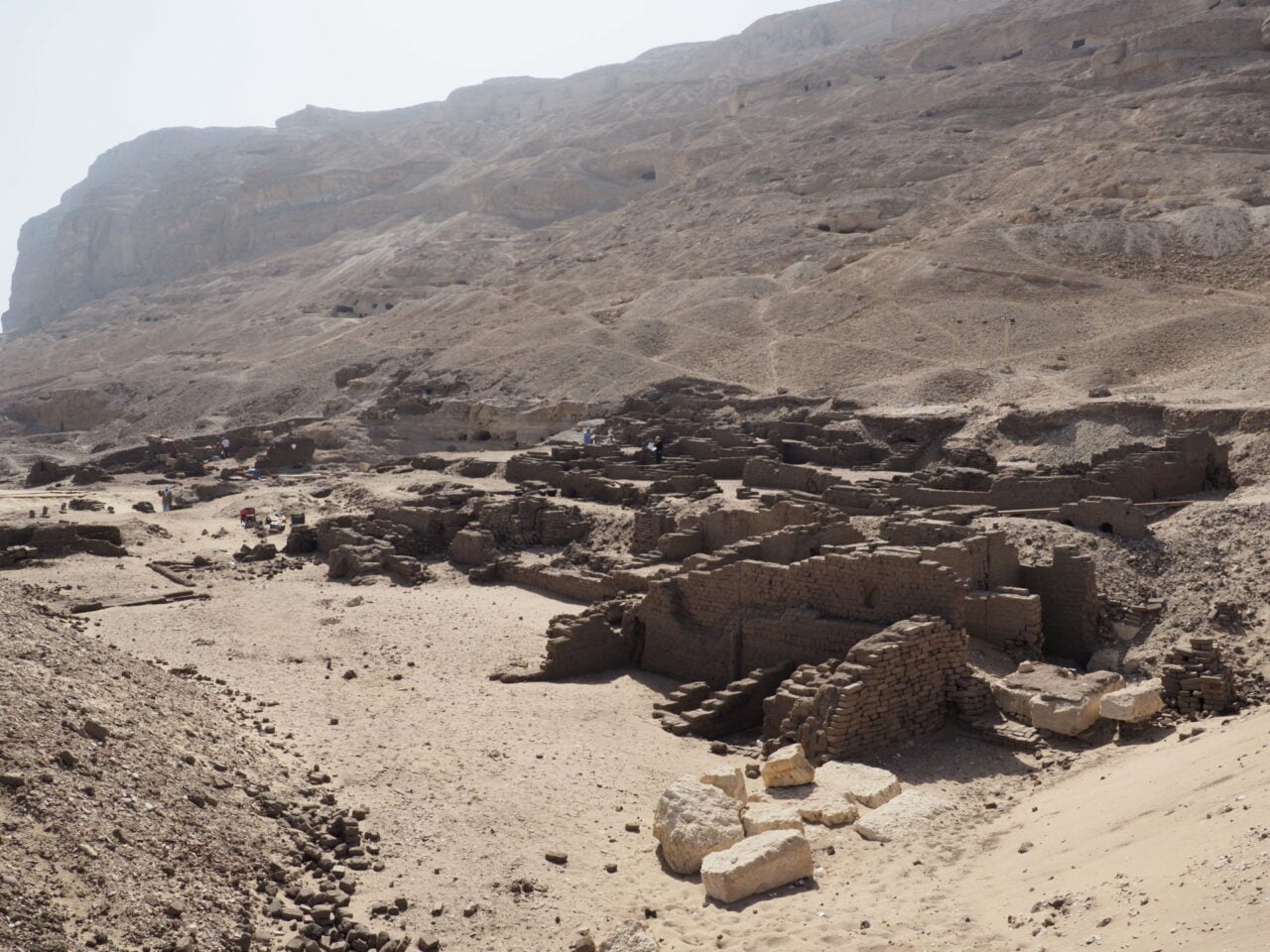
According to Leitz, some days the team would find 50 to 100 shards per day. But the sheer volume is both a blessing and a challenge, he added, as each shard requires complete 3D digitization, cataloging, and then interpretation.
“We expect to find many more ostraca,” Leitz said. “The high and ever-growing number of objects is encouraging, but it also presents us with challenges.”
Read the full article here