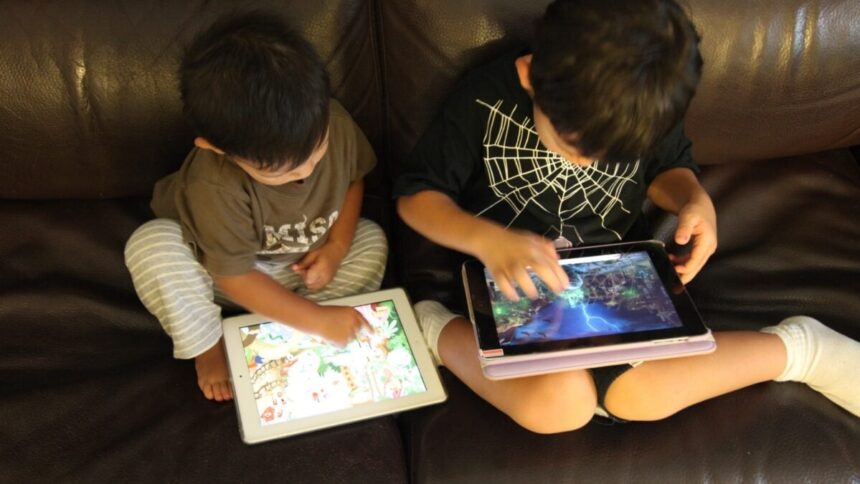
Our digital ecosystem is trash. It is low quality and intentionally designed around maximizing user engagement, luring you in for hours on end so that it can push the maximum number of ads in your face.
The consequences this design has on the health and well-being of children are heavy and well-documented. Prolonged low-quality digital media use, which includes TV, the internet, social media, video games, and interactive assistants, can lead to language delays, sleep problems, anger issues, poor eyesight, weaker cognition, attention problems, and even increased risk of developing cardiometabolic problems like heart disease and type 2 diabetes.
The American Academy of Pediatrics, a respected professional group of child healthcare professionals that recently got caught up in a funding battle for standing up against RFK Jr., released a new policy statement on Tuesday highlighting how best to go about protecting minors from the digital world. The report says that it shouldn’t be up to the parents to minimize their kids’ screen time, but the responsibility of tech companies and the government to prohibit harmful design.
That’s because the internet is pervasive, easy to access, and constantly reminds you of its existence with notifications. A parent can only do so much with screen time limits. What should be done instead is enacting strict, useful child safety guardrails and sticking to them.
“Intentionally designed around engagement and commercialization, this ecosystem is shaped by industry incentives and lies largely outside of the control of individual families,” the AAP said in the report. “That is, many parts of the digital ecosystem have business models based on data collection and advertising revenue.”
Algorithmic recommender systems, autoplay, intermittent rewards, user profiling, friend recommendations, and social qualification metrics are all methods used to encourage prolonged and frequent use on social media, and can amplify the dark side effects of the internet.
The report comes as the effects of social media on minors are starting to get more policy attention across the world. Last month, Australia became the first major country to ban under-16 users from social media. Roughly a month in, nearly 5 million accounts have been removed, though numerous teens have claimed they were able to outsmart the ban.
Even though there are some pitfalls, the ban is widely considered to be a blueprint for potential similar initiatives across the world, some already underway.
Denmark, Malaysia, Norway, France, Spain, Germany, Greece, Italy, and the wider European Parliament have all recently either called for or announced specific plans to enact a ban similar to the Australian law.
The United Kingdom is looking to be the strongest contender for the next country to enact a ban. Prime Minister Keir Starmer shared earlier this week that the government is taking action, and a cohort of British ministers will visit Australia to examine their approach.
Considering the power of big tech companies (all deeply unhappy about the Australian ban) in American politics, it’s unlikely that similar legislation would pass on the U.S. federal level. But some states have voiced their desire to enact a similar ban at the state level, namely California and Texas.
The AAP report doesn’t endorse a ban. On the contrary, it says that digital media isn’t all bad for children. For example, the report claims that exposure to high-quality and educational content without ads and engagement traps like high gamification is associated with pro-social behavior in preschoolers and kindergarteners.
“Child-centered designs are achievable, better for society, and can lead to digital products that promote children’s well-being,” the report said. Child-centered designs are those that don’t prioritize excessive use, datafication, and commercialization, the report said.
Instead, the report asks tech companies and governments to put strict guardrails in place. Tech companies should have child safety teams that report directly to company leadership, test products for safety and impact through youth collaborations, and have safety and privacy features as their default setting. So that includes no autoplay, no targeted advertising on minors, no data collection, and no chat features for children.
On the policy side, the report asks the government to fund third spaces like libraries and parks that can be a better alternative to the digital world, fund child-centered media like PBS Kids, restrict social media in schools for distraction-free learning, and subject digital media companies to the same product safety regulations as food, cars, and medical devices.
“Regulatory agencies could require that digital media companies who intend to include minors report key metrics on their digital content and patterns of use. Safety and well-being metrics could be regularly incorporated with earnings reports,” the report suggested.
The organization is also working on a separate policy statement to focus on the impact of artificial intelligence on children.
Read the full article here