For years, Silicon Valley has sold a utopian future to the world, in which all-powerful AI tools automate entire workflows, both freeing up time for burnt-out workers while maximizing profit for shareholders.
Many companies across the American workforce subscribed to this vision. Artificial intelligence crept into the workplace as business leaders promised four-day workweeks and a true work-life balance in a business world where working overtime has become somewhat of a norm.
Now, workers are saying that’s not necessarily the reality they are facing.
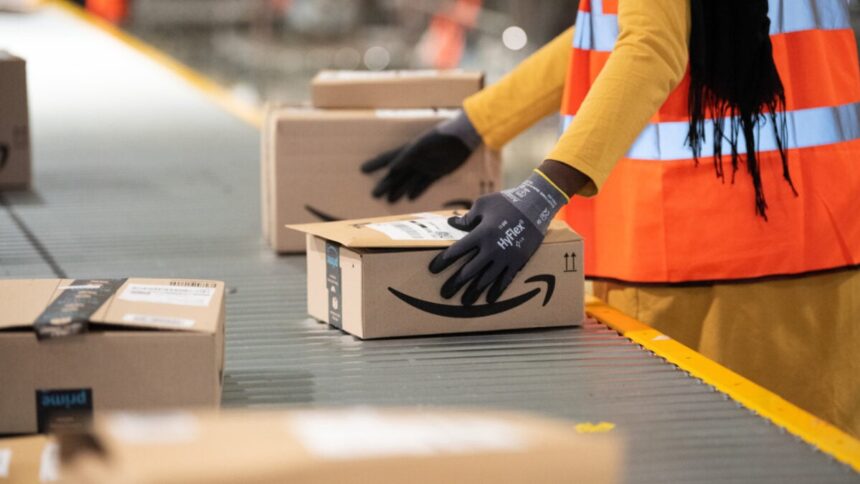
A group of Amazon corporate employees told The Guardian that the company’s internal push for all employees to use “half-baked” AI tools was actually unhelpful and just added to their workload.
The AI tools often make mistakes, which the workers then have to dig through and correct or consult with colleagues to verify results, according to the report. It all just adds up to the time they spend on each task and has been hurting productivity, the employees said.
“I and many of my colleagues don’t feel that it actually makes us that much faster,” one software developer told the Guardian. “But from management, we are certainly getting messaging that we have to go faster, this will make us go faster, and that speed is the number one priority.”
The experience isn’t limited to Amazon employees. A recent survey showed that the vision to save time for workers via AI has proven to be a bit bogus across the economy.
Workforce analytics company ActivTrak analyzed work activity across 163,638 employees in 1,111 organizations over three years, only to find that AI is actually increasing the average workload of employees.
“The data is unambiguous: AI does not reduce workloads,” the researchers wrote in a report.
The AI users reported spending more time on every measured work category after AI adoption, with not a single work category showing any decrease. The number of emails a worker had to send was up 104%, chat and messaging was up 145%, and time spent with business management tools was up 94%.
“AI is being used as an additional productivity layer, not a substitute for existing work,” the report says.
The ActivTrak survey paints a slightly different picture from the Amazon report. While Amazon employees reported that the AI tools did not decrease the time they spent doing a task, the survey did find that AI helped speed up some tasks and free up time. But the outcome was still the same: that “free time” was just filled up with even more work. The AI tools ultimately helped the company in its quest for more output, but didn’t help the employee who is looking to ease her work burden.
In a podcast last year, former Google executive Mo Gawdat spoke about this exact disconnect between the promised consequences and the reality of artificial intelligence and technological advancements overall.
“How often did social media connect us, and how often did it make us more lonely? How often did mobile phones make us work less? That was the promise, the early ads of Nokia, where people had parties, is that your experience of mobile phones?” Gawdat said.
The reason why, according to Gawdat, is that technology magnifies existing human abilities and values, and in this case, it’s capitalism’s relentless pursuit of profit.
Read the full article here