The tech industry has spent the past few years trying to convince us that the future of AI lives behind a pair of lenses. Meta is betting billions on it so far, Google is rolling out Android XR, Samsung is getting in on the glasses trend, and Snap is still trying to make Spectacles catch on.
The pitch is always some version of the same fantasy: you’re in a foreign country where you don’t understand the language. You look at a menu, and a translation appears right in your field of view. Look at a dress someone is wearing on the street, and AI whispers in your ear the name of the dress and its designer. You’re at a party and you’re terrible with names, but not to worry, your AI-enabled glasses can display the names of everyone there so you don’t have any awkward social interactions.
It sounds like a great idea, but in practice, it’s become a disaster for the obvious reason: people don’t like being recorded without their consent.
Determined to salvage their hardware investments, companies say “let’s just put AI on it,” Maruchi Kim, a recent Ph.D. graduate from the University of Washington who worked on Google’s XR team until earlier this year, tells Gizmodo, “but it still carries so much stigma because it started off as this video capture device.”
This, ultimately, is the unsolvable problem for AI glasses, no matter how capable their AI components are in practice: glasses were never designed for conversational AI; they were designed for first-person video capture and augmented reality. AI got bolted onto them because they were products these companies already had that weren’t selling in the kind of numbers they needed.
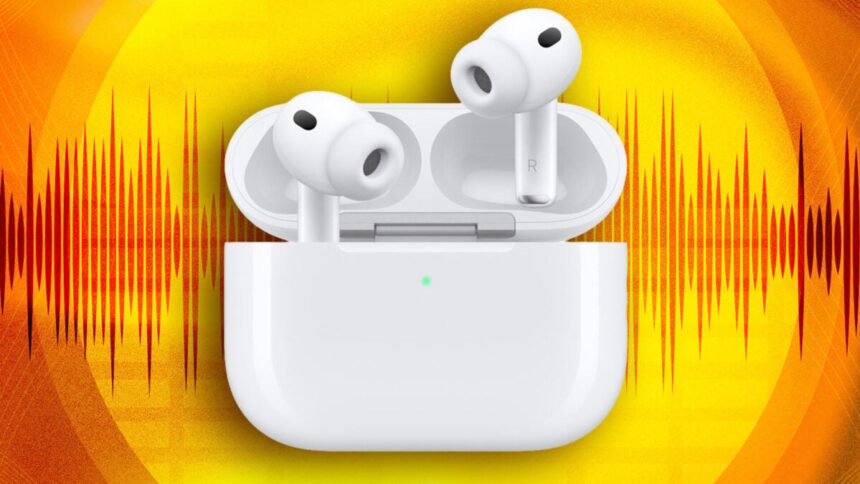
Meanwhile, the wearable best suited to actually carry a conversational AI assistant everywhere has been sitting in your ears for a decade, quietly proving itself in a way that glasses have yet to do.
AI Glasses: a divisive tech solution
Smart glasses exist because of two capabilities: they can record first-person video, and they can overlay information into your field of view. “I think these are both things that people didn’t really ask for,” Kim says.
Video capture from a face-mounted camera has always been a feature that no one really knows what to do with, and the problems have only gotten worse from the halcyon days of 2013 when “glassholes” were being socially ostracized. Now, the cameras are better, video data transmission is much faster, and unlike the distinctive, Borg-like profile of Google Glass, smart glasses put cameras into regular-looking glasses like Ray-Bans.
Add in an increasingly toxic internet culture (another Meta innovation, incidentally), and we get to 2026’s “pervert glasses.” There’s no shortage of instances of men wearing Ray-Ban Meta glasses harassing women on the street or adolescent boys in school filming their bullying, mostly of young girls. The problem is bad enough that universities are warning students about the problem. Bars and clubs in multiple countries are banning them, as are entire court systems.
Meta has been trying to engineer a solution to the problem of people altering their smart glasses to disable the indicator LED light, but even when everything works as intended, the privacy onus is still put on everyone else to police the user’s social behavior. An active LED light might tell you someone is recording you, assuming you know that’s what that light even means and that they’re within your field of view. What it doesn’t do is stop creeps from recording you.
This “pervert” behavior involves a tiny subset of users (Ray-Ban Meta glasses have sold millions of units), and nearly all of Ray-Ban Meta owners buy them so they can record their bike or snowboard rides (something GoPro cameras have been doing for a decade now) or get convenient live translations in an overlay while traveling in a foreign country. These are compelling use cases, but as unfair as it may be for many, anyone using AI glasses is going to get painted in the same light as the worst abusers of the tech.
And, ultimately, none of this is really about AI at all, and it shows. The discomfort people feel around AI glasses has nothing to do with an AI assistant answering a question; it’s about not knowing whether the person across the table is recording you or distracted by a display only they can see.
“A camera mounted near someone’s eyes can continuously capture people, computer screens, documents, homes, or conversations from a very natural first-person perspective,” says Irtaza Shahid, a computer scientist, acoustic and AI researcher, and a founding research scientist at the audio AI company Hearvana. “The people being observed may not know what is being captured, whether it is being stored, or whether an AI system is analyzing it. That creates an unusual privacy asymmetry: the wearer knows they are using an intelligent sensing device, while the people around them may not.”
AI earbuds: social AI without the stigma
Compare all of that to wireless earbuds, a wearable form factor that has already succeeded in the hardest fight in consumer hardware: it made itself invisible.
“It’s a device that started off as technology. It’s not trying to be a fashion accessory like glasses or a pendant or a pin,” Kim explains. “They started off as these devices for us to listen to music, and then we added a microphone, and now we can take phone calls with them.”
It’s also a form factor that enjoys the kind of market penetration that smart glasses can only dream of: in 2025, there were 420 million wireless earbuds sold globally, compared to only 7 million Ray-Ban Meta AI glasses.
“They’re a technology that we’ve adopted as a society because it’s just provided so much utility,” Kim says. The sheer size of the potential install base for AI assistant-enabled wireless earbuds, whether through apps on your phone or built into the earbuds themselves, is enormous.
AI in your ear also doesn’t make people sitting across from you worried that they’re being recorded in the same way as smart glasses do, and people are already so acclimated to people listening to music or talking on the phone using microphone-equipped wireless earbuds that you talking to or listening to a response from an AI assistant wouldn’t even register. People already talk to Siri all the time in public spaces; introducing an LLM-driven AI assistant into this dynamic is seamless.
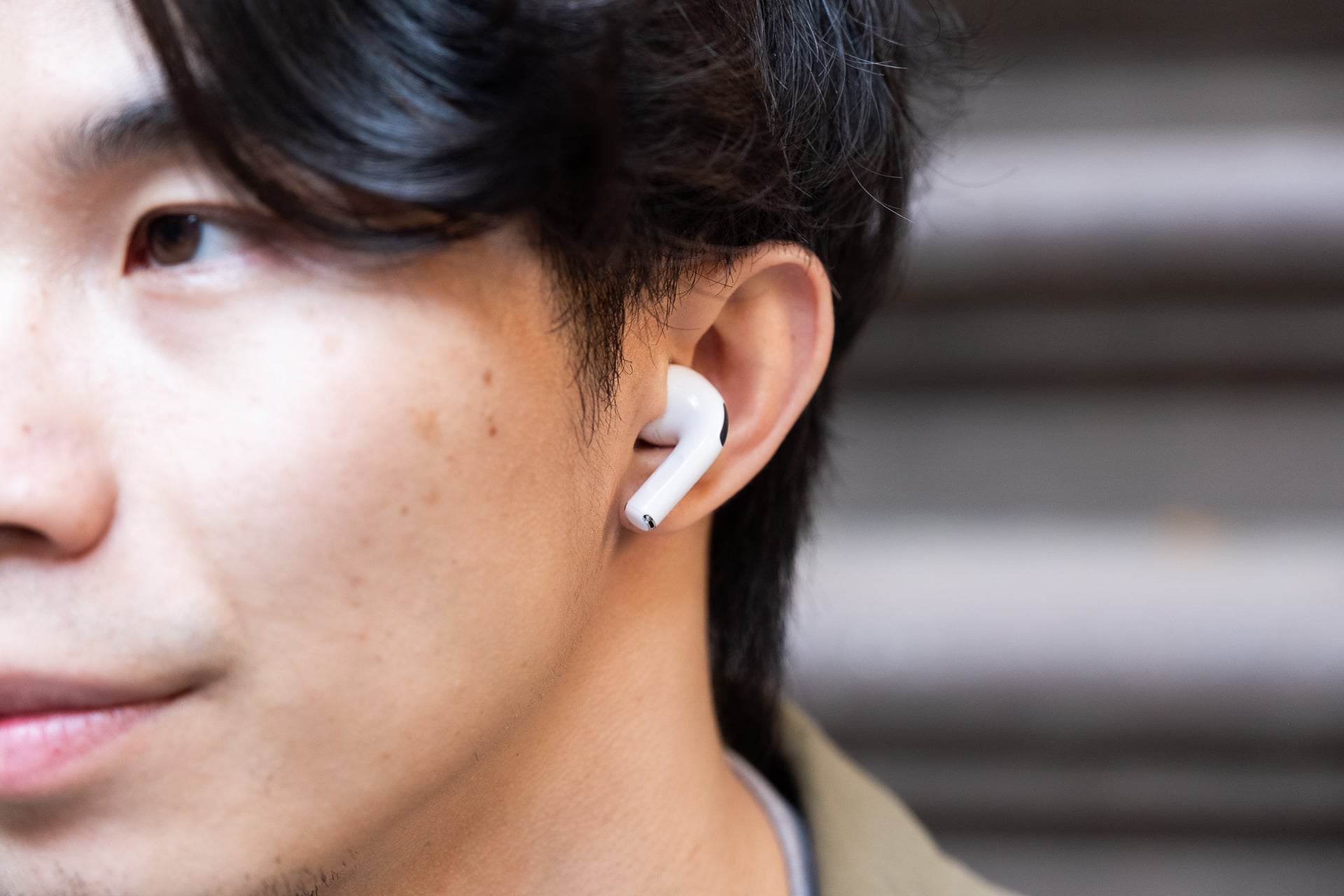
“The ear is a particularly interesting location for wearable intelligence because earbuds are already socially accepted, they have access to both the user’s speech and surrounding sound, and audio can provide a surprising amount of contextual information without continuously capturing images of the world,” Shahid says.
And, ultimately, querying an LLM, whether that’s typing a prompt into ChatGPT or using a voice interface to the same end, is an inherently conversational experience that is naturally suited for the voice-audio interface we’ve already been using for decades.
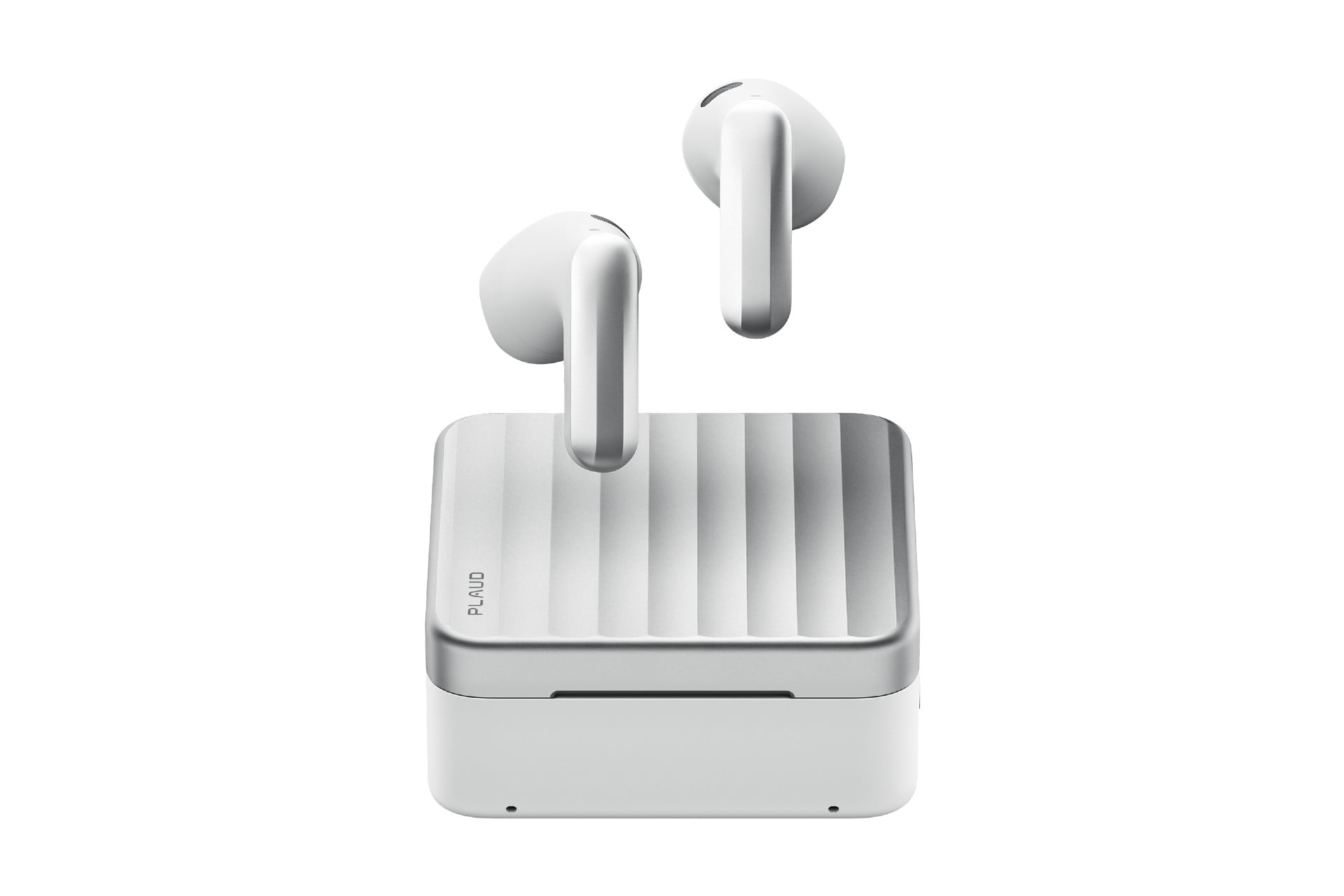
Plaud, the maker of AI notetaking devices like the Plaud Note and Plaud NotePin, has taken its notetaking AI a bit further with the Plaud One Explorer Edition, a pair of AI wireless earbuds that can record meetings and conversations but also uses agentic AI that can take those conversations and create meeting notes, follow-up documents, and more from those conversations through a conversational interface.
“Raw conversation made an audio wearable particularly compelling,” Ilgu Cha, head of industrial design at Plaud, tells Gizmodo. “Speaking and listening are already natural human behaviors. With Plaud One, the earbuds capture what you hear and say across calls and online conversations, while the standalone case extends that capability to in-person conversations. The goal is not to make people learn another interface but to let AI fit more naturally into how people already communicate and work.”
What about bystander privacy?
The obvious concern with AI glasses is their video recording capability, but there is also a genuine concern about recording people’s conversations without their knowledge or consent.
“Trust has to be designed into a wearable like this from the beginning,” Cha says. “Plaud One does not silently record or ‘always listen’ in the background like some devices out there. Recording is deliberately initiated by the user, and the case includes a visible indicator showing when recording is active. For calls, Plaud provides an audible recording notification, and we always encourage users to ask consent and follow local laws to inform participants where required.”
Unlike recording video of people in public, where there is generally no expectation of privacy, there are already laws and plenty of legal precedent behind prohibiting recording conservations you aren’t party to, even in public spaces (one-party consent laws only apply in some states). In many jurisdictions, doing so is a felony, so there is a massive disincentive to covert recording. There’s also nothing special about using a pair of wireless earbuds to commit such villainy; your phone’s microphone can do the same thing and is probably even better at it than wireless earbuds would be.
Another key aspect here is that microphones don’t necessarily need to be built with a high level of audio resolution to be functional, whereas lower-resolution video greatly diminishes the functional purpose of video-capable smart glasses. That doesn’t entirely eliminate the potential for AI earbuds to violate someone else’s privacy, but you can greatly reduce the potential for privacy violation with hardware and software design choices up front.
“A microphone can also capture extremely sensitive information, particularly conversations,” says Shahid. “In some respects, audio sensing can be even less visible to bystanders than a camera. The important opportunity is therefore not simply replacing cameras with microphones but designing wearable intelligence around the minimum amount of sensing necessary for a task. That changes the privacy question from ‘How do we protect everything the device records?’ to ‘Can we design the device so that sensitive information never needs to be captured or retained in the first place?’”
Of course, the challenge here is that it relies on the company to behave in the public interest, in this case, bystander privacy. If AI earbuds makers were to make wireless earbuds with the explicit intent of discreetly recording another person, it’d be scummy, for sure. They’d also have very stiff competition, since audio surveillance equipment has been on the market for decades and is more suited for that task at a lower cost than a high-tech microphone hanging out of your ear that can only pick up a clear voice within a few feet of you.
AI also doesn’t add anything to this equation beyond doing live translations or transcription, both of which already exist on your phone with apps such as Otter and Google Translate. Simply put, the use cases for a dedicated, discreet audio-recording pair of AI earbuds are vanishingly small, and those few cases where someone would try to attempt it risk imprisonment for doing so.
What about visual AI?
The strongest argument for AI glasses is visual context, and there are instances where visual context is necessary for different AI functions and a pair of smart glasses makes sense. Sometimes an AI assistant really does need to see what you are looking at, whether that’s a street sign you want to translate or a product you want to identify. The thing is, an AI assistant likely doesn’t need glasses to do so.
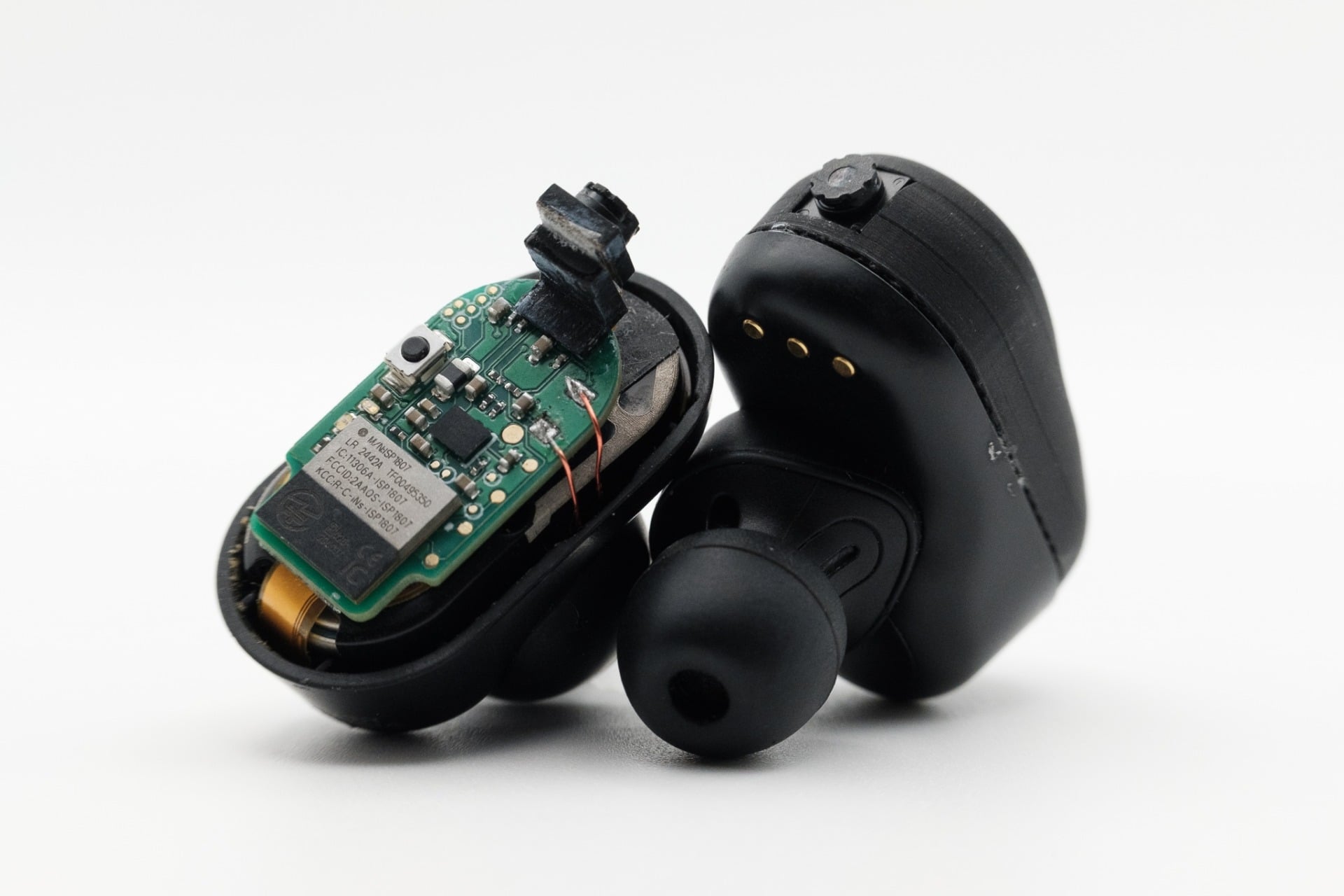
The existing social permission structure around wireless earbuds is part of why Kim co-developed VueBuds, a low-res camera system embedded in a pair of Sony wireless earbuds that gives you nearly all the benefits of visual artificial intelligence without all of the problematic baggage associated with smart glasses.
“We show analytically and empirically that while each camera’s field of view is partially occluded by the face, the combined binocular perspective provides comprehensive forward coverage,” Maruchi’s team explains in their paper describing the project. “By integrating VueBuds with [visual language models], we build an end-to-end system for real-time scene understanding, translation, visual reasoning, and text reading, all from low-resolution monochrome cameras drawing under 5mW through on-demand activation.”
Even more impressive, the VueBuds prototype managed to perform as well as Ray-Ban Meta AI glasses across more than a dozen visual AI tasks like image recognition and translation during a study with 90 participants.
Of course, Kim isn’t the only one thinking about alternatives to smart glasses for visual AI. Apple is reportedly working on integrating cameras into its AirPods for exactly this kind of use as well.
One of the remarkable things about VueBuds is that the resolution for the monochrome cameras is only 324 x 324, and they only take a single image each for VLM processing. In addition to eliminating any potential privacy concerns about filming people without their consent, this also allows for processing on a small language model running locally on your phone, giving you a faster response time than a cloud-based system for most queries.
“One of the insights that we gained from VueBuds is that you don’t need to have a 1080p image for AI to see what you see and give you a reasonable answer back,” Kim says.
There are also plenty of design reasons to focus on lower-resolution data capture, especially when it comes to on-device processing and battery life.
“The interesting research question, in my view, isn’t simply whether earbuds can do everything smart glasses can do,” Shahid says. “It’s whether we can build useful ambient intelligence that deliberately senses less—less data, at lower resolution, with more processing on-device—and still gives the user the capabilities they actually need.”
Meanwhile, some smart glasses makers are looking at Meta’s misfortunes and adapting their designs to do away with the cameras entirely—including Meta itself.
“You’re seeing all these other smart glass companies now that try to do some subset of what Ray-Ban Meta does because of the privacy implications,” Kim says. “These are glasses that maybe don’t have a camera, and they just use a microphone, right? My stance, personally, is that we have a perfectly capable camera and a display already in our phone, already in our pocket. There’s no reason we need to have a camera on our face.”
AI assistants already have the wearable they need to succeed
Of course, none of this precludes glasses from being a useful form factor for AI, so long as the form factor suits the purpose.
“Different form factors also naturally lend themselves to different kinds of context,” Cha says. “Glasses can be compelling when visual context or visual output is central to the experience. Audio wearables are particularly well-suited to conversation. We don’t necessarily believe there needs to be a single universal wearable form factor for every AI application. The form should follow the context and the job the AI is being asked to perform.”

The tech industry loves a new form factor, of course, whether that’s pins, pendants, glasses, or headsets, and there’s nothing especially exciting about wireless earbuds anymore; in fact, they are utterly familiar. This is also why they are such a good fit for agentic AI assistants.
“Today, AI is still largely passive,” Cha says. “You open an app, construct a prompt, supply context, and tell it what to do. We believe the longer-term opportunity is an interface through which people can simply speak; the AI can understand the relevant context, help carry work forward, and come back to the user when human judgment or input is needed.
“Earbuds are particularly interesting in this context because speaking and listening are already natural behaviors.”
For most AI tasks where visual context is needed, this capability can be added selectively without the problems introduced by high-resolution video recording, whether that’s through cameras in your wireless earbuds or even just using your phone to provide an AI assistant the needed visual context.
“The more important question,” Cha says, “is whether the interface provides AI with enough context and intent to be genuinely useful while remaining natural, trustworthy, and socially acceptable.”
The result is less cinematic and “techy” than an always-on visual overlay like you see in science fiction, but it’s also much more plausible as something someone will wear all day without every social interaction turning into a negotiation over cameras. The AI assistants of the future do not need to stare at everyone you meet; they need to listen when asked and return a response or confirmation when the work is done. Turns out we already have a wearable for that.
Read the full article here