Artificial Intelligence has been a buzzword in the auto industry, not just as a solution for ever-increasing costs in developing new electric vehicles, but also to speed up development times, reduce the number of prototypes developed, and make system updates more quickly. However, some companies are still finding it difficult to fit AI and software-developed products into their existing corporate structures.
Former GM Chief AI Officer Barak Turovsky announced on November 21 in a LinkedIn post that he’d resigned from his position of eight months. That was confirmed by General Motors the following Monday by CIO Drive, The Detroit News, and other outlets.
Formerly an AI executive at Google and, most recently, Cisco, Turovsky wrote in his post, “Physical AI is just as exciting as LLMs,” while adding that he would be taking “a little sabbatical to work on some exciting new ideas.”
His profile also shows his previous experience at IBM and PayPal, while he remains on the advisory committee at VentureBeat and is now an operating advisor at Bessemer Venture Partners.
Turovsky’s departure after less than a year is another blow for GM’s technology expertise as it pivots back to internal combustion engine vehicles, hastily adds hybrids, and moves more production to the United States after years of electric vehicle development was thrown for a loop by the Trump Administration’s tariff actions this year and the end of the federal EV tax credits in September. While GM is likely to remain a second-place EV seller in the US behind Tesla, declining sales in China and a steep drop projected in the US in the fourth quarter of 2025 spell trouble for the largest of the Big 2.5 automakers.
Compounding problems is GM’s persistent employee reorganization following domestic policy changes. Its Software and Services team gained a new leader in former Aurora Innovation co-founder and ex-Tesla Autopilot executive Sterling Anderson at the beginning of this month after former head Dave Richardson, himself a former Apple executive, stepped down at the end of October, according to WardsAuto.
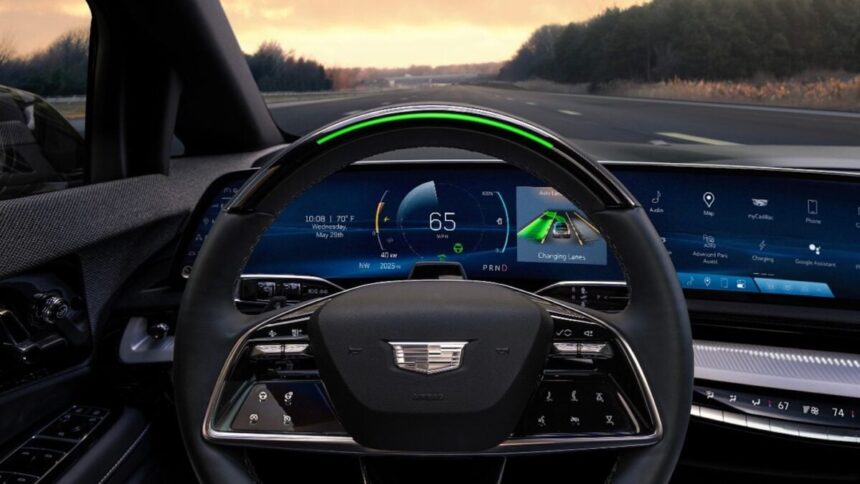
While GM is rolling out a new AI assistant and a more sophisticated version of its SuperCruise advanced driver assistant system in the coming years, those were developed under previous teams. The automaker is still bracing for more difficult times with a round of layoffs in recent months that included hundreds of positions on both EV battery and vehicle manufacturing lines, as well as hundreds of white-collar employees.
And it’s unclear where software-developed vehicles will land with automakers going forward, as EVs are struggling to achieve the projected levels of adoption in several large markets, and consumers get more price-conscious amid economic uncertainty. Some companies, like GM, are continuing to push AI and AV technology development even if cutting costs moves even higher up the priority list.
Read the full article here