
Ticks in the United States are encroaching into places where they usually haven’t been present, as are the diseases they can carry.
Doctors in New York recently reported on a case of a mysterious tickborne illness often mistaken for Lyme disease involving an 8-year-old girl. The girl had contracted southern tick–associated rash illness, or STARI, a condition with no established cause that’s linked to the lone star tick (Amblyomma americanum). Though she recovered with no serious complications, doctors are likely to face a harder time distinguishing similar-looking diseases as the lone star tick’s range expands further, the authors warn.
“The bull’s eye rash, or erythema migrans, has long been considered the hallmark of early Lyme disease, but STARI has become an increasingly common mimic,” lead author Andrew Handel, a clinical associate professor of pediatrics in the Division of Infectious Diseases at the Renaissance School of Medicine at Stony Brook University, told Gizmodo. “In areas where both Lyme disease and STARI are endemic, there is no reliable way to distinguish the two based on exam alone.”
The mystery of STARI
STARI was first discovered in the mid-1980s by doctors in Missouri. As the name suggests, it’s typically been reported in the southeastern United States.
Though usually not as serious as Lyme disease, the symptoms of STARI closely resemble the latter, particularly with the common presence of a bull’s eye rash. In fact, STARI was only identified as something new because cases were showing up in places where the primary vector of Lyme disease, the blacklegged tick (Ixodes scapularis), was uncommonly found. Lyme disease is caused by certain Borrelia bacteria, primarily Borrelia burgdorferi in the U.S.
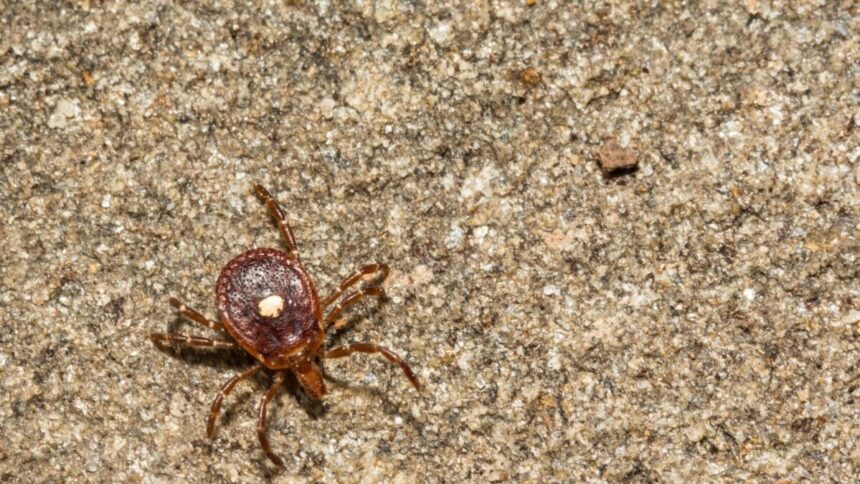
STARI is instead strongly associated with the bite of the lone star tick, which has historically been widely distributed throughout the southern Midwest and southeastern U.S. Like many species, though, the lone star tick has moved beyond its usual haunts, and it’s now commonly found in pockets of the upper midwestern and northeastern United States as well as eastern Canada. These newer areas are already endemic to the blacklegged tick and Lyme, setting the stage for increasing episodes of mistaken identity.
This latest case happened in June 2025. The 8-year-old girl and her family sought medical care for a bull’s-eye rash, fever, enlarged lymph nodes, and muscle pain. Twelve days earlier, she had been bitten by a tick, which was collected and stored in a sealed bag. Her pediatrician initially diagnosed her with Lyme disease and prescribed her a common antibiotic treatment for two weeks. Within a week, her rash and other symptoms had dissipated, and she made a full recovery.
When the tick was examined, though, it turned out to be an adult male lone star (both male and female lone star ticks will bite humans). The girl was subsequently diagnosed with STARI, while Handel and his team performed a deeper analysis of the tick. They found a different species of Borrelia than the one that causes Lyme in the tick, Borrelia lonestari.
To this day, scientists aren’t actually sure about what causes STARI. Though B. lonestari infection is a leading suspect, some studies have failed to detect any relevant bacteria at all in people with the condition. That’s led to the alternative hypothesis that STARI is a hypersensitivity reaction to the lone star tick bite itself—one that might be connected to alpha-gal syndrome, another condition linked to the lone star (people with alpha-gal syndrome basically become allergic to red meat and other foods that contain alpha-gal). Because the girl wasn’t tested for B. lonestari, it’s impossible to know for sure whether it caused her illness, the doctors wrote.
Their findings were published in this month’s issue of the journal Emerging Infectious Diseases.
The future of STARI
This isn’t the first case of STARI ever detected in New York. But with the lone star’s eight-legged footprint growing bigger, similar cases of confusion are likely to happen more often, and not just in the northeast. The blacklegged tick is also expanding its range further south into areas where the lone star has long been prevalent, such as North Carolina.
Handel says this case underscores the need to develop better lab tests for diagnosing Lyme disease early on, since currently available tests may show false-negative results. There are no specific blood tests for STARI, so it can only be clearly diagnosed when Lyme is ruled out and a lone star tick bite is highly suspected. This means it’s all the more important for people to hold on to the ticks that bite them in the event of illness, too.
“Since Lyme disease and STARI are caused by different tick species, it also highlights the importance of identifying the tick species and preserving the tick after a bite has occurred,” he said.
It’s not just STARI that New Yorkers have to worry about more either—the lone star tick is bringing along other illnesses for the ride as well.
Read the full article here