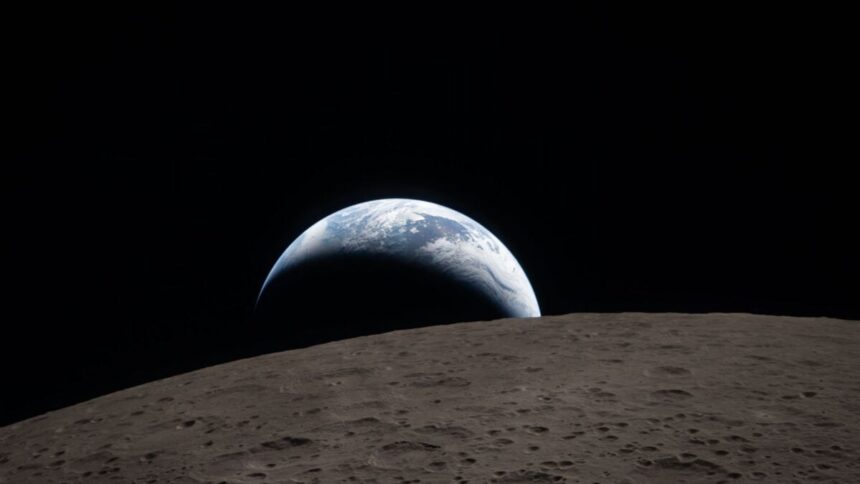
On Monday, NASA’s Artemis 2 mission reached its destination, sending the Orion spacecraft and its crew around the far side of the Moon. The astronauts set a new record for the farthest distance humans have ever traveled from Earth, then spent the day observing the lunar surface and taking jaw-dropping photos.
NASA’s Reid Wiseman, Victor Glover, Christina Koch, and the Canadian Space Agency’s Jeremy Hansen documented impact craters, ancient lava flows, cracks, ridges, and other surface features as they flew over the far side. They also described differences in color, brightness, and texture across the lunar terrain. The crew witnessed an “Earthset”—the moment when Earth dipped below the Moon’s horizon—and an “Earthrise” as Orion emerged from behind the Moon. They even experienced a nearly hour-long solar eclipse.
Amid all that spectacle, there were some more subtle moments that were easy to miss. Fortunately, Gizmodo watched NASA’s live flyby coverage from start to finish, so we’ve got you covered. Here are some cool details you may not have picked up on yesterday.
Lots of love for Jim Lovell
-
Artemis 2 Mission Specialist Jeremy Hansen holds up the Apollo 8 patch that Jim Lovell’s family sent the crew ahead of their mission. © NASA
At the start of each flight day, Mission Control rouses the Artemis 2 astronauts with a wake-up call. Typically, flight controllers just play one of the songs selected by the crew’s family and friends, but on Monday, they also played a pre-recorded message from the late Jim Lovell, a distinguished NASA astronaut who went to the Moon aboard Apollo 8 and Apollo 13. Here’s Lovell’s full message.
“Hello, Artemis II! This is Apollo astronaut Jim Lovell. Welcome to my old neighborhood! When Frank Borman, Bill Anders, and I orbited the Moon on Apollo 8, we got humanity’s first up-close look at the Moon and got a view of the home planet that inspired and united people around the world. I’m proud to pass that torch on to you—as you swing around the Moon and lay the groundwork for missions to Mars… for the benefit of all. It’s a historic day, and I know how busy you’ll be. But don’t forget to enjoy the view. So, Reid, Victor, Christina, and Jeremy, and all the great teams supporting you—good luck and Godspeed from all of us here on the good Earth.”
Lovell passed away in August, 2025, at the age of 97. He served as commander of Apollo 13, which set the human spaceflight distance record in 1970 when an oxygen tank explosion forced the spacecraft to return to Earth instead of landing on the Moon as planned. That record stood uncontested for more than half a century until Artemis 2 beat it at approximately 1:57 p.m. ET on Monday.
Orion was carrying a piece of Lovell’s legacy when it achieved that milestone. Before Artemis 2 launched, his family sent the crew a patch from his Apollo 8 mission, and it has been with them every step of their journey.
“When this showed up in our office from his family, we were completely honored,” Artemis 2 Mission Specialist Christina Koch said over the comms system Monday, holding up the patch. She added that she had the Apollo 8 “Earthrise” photo in her room as a kid and said it inspired her to keep working hard.
The farthest jar of Nutella in history
Honored to have traveled further than any spread in history 🚀 Taking spreading smiles to new heights ❤️ pic.twitter.com/vDUJMi1qbS
— Nutella (@NutellaUSA) April 6, 2026
With Orion approaching the Moon, NASA’s live broadcast offered brief glimpses inside the spacecraft as the crew prepared for the flyby. At one point, something unexpected floated into view of one of the onboard cameras.
A jar of Nutella gently gliding through the cabin caused quite a stir on social media. It was probably the greatest free advertising moment in history, and the brand is capitalizing on it. The official Nutella X account pointed out that once Artemis 2 surpassed the Apollo 13 distance record, there could be no question that the jar of chocolate-hazelnut spread had traveled farther from Earth than any spread in history.
A crater named Carroll
After surpassing the Apollo 13 distance record, Mission Specialist Jeremy Hansen made a heartfelt request over the comms system.
Hansen said he and his crewmates chose names for two previously unnamed lunar craters, suggesting that one near the far side of the large impact crater Orientale be named “Integrity” after their Orion spacecraft. He asked that the other, located on the boundary between the near side and the far side, be called “Carroll” in honor of Commander Reid Wiseman’s late wife.
“We lost a loved one, her name was Carroll, the spouse of Reid, the mother of Katie and Ellie,” Hansen said, his voice wavering. “It’s a bright spot on the Moon,” he said of the crater. “And we would like to call it Carroll.”
The entire crew embraced after Hansen tearfully delivered the message. Carroll Wiseman passed away in May 2020 after a five-year battle with cancer. She was 46 years old. This beautiful tribute to her was one of the most unforgettable moments from the mission so far.
The Moon is more colorful than you think
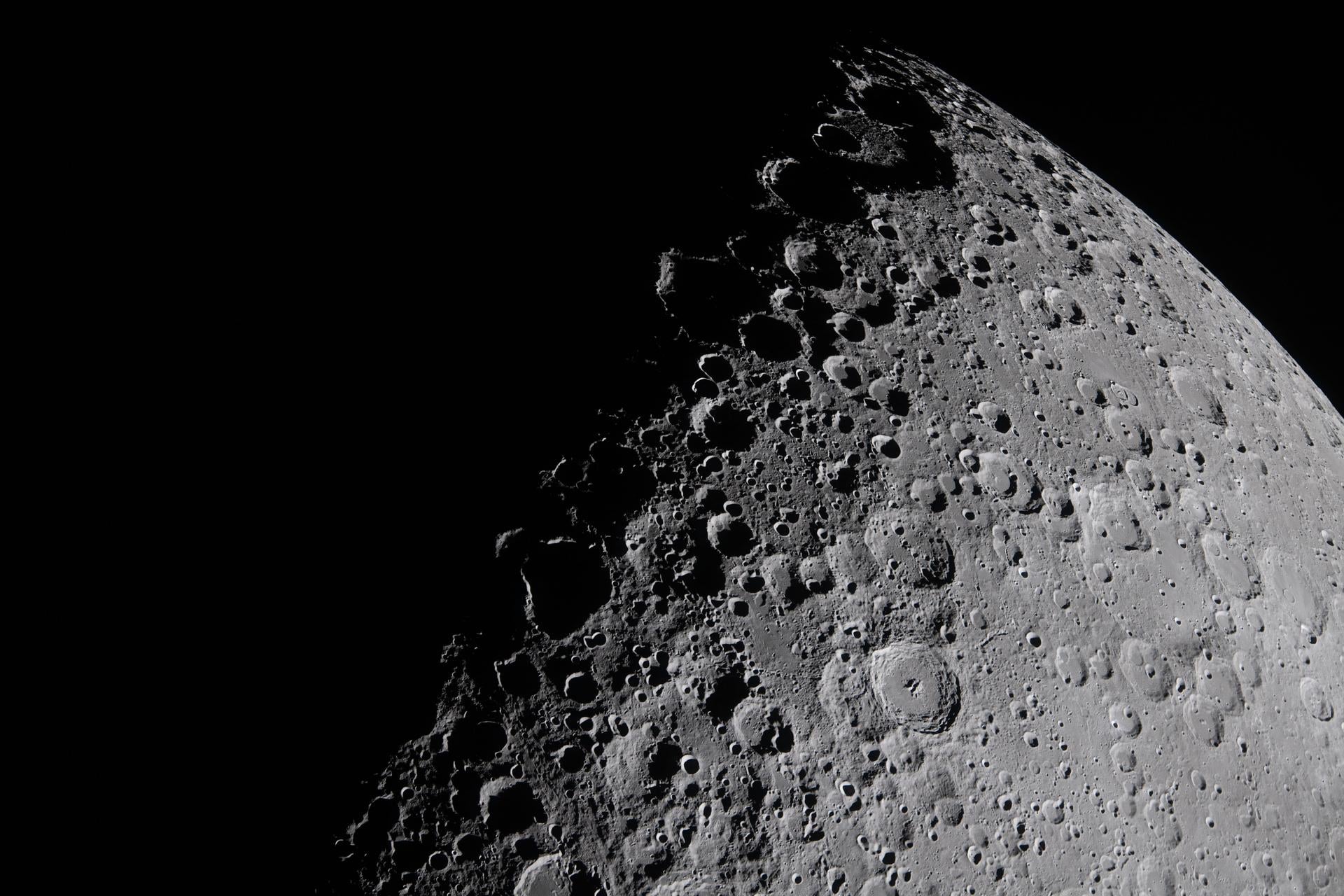
The Moon may look like a gray wasteland in the above image, but photos can be deceiving. Over the course of the seven-hour lunar observation period, the crew noted some incredible color variation on the surface.
At one point, Mission Specialist Christina Koch said that the longer she looked at the Moon, the more brown it appeared. The crew also pointed out hues of green that are easier to discern with the human eye than telescopes or satellites. Studying this color variation can offer insight into the mineral composition and age of a given feature.

Read the full article here