I swear, almost every robot vacuum in the world right now feels like it’s designed just to check boxes—user experience be damned. How that manifests changes from one vacuum to the next: they might be obnoxiously loud, with a stinky dock; or maybe they’re laden with features that sound good on paper but suck (not in the good way) in practice.
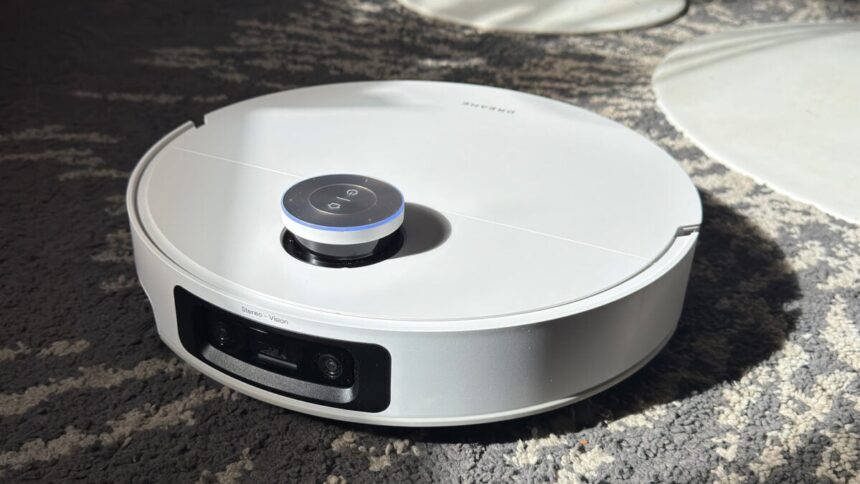
The Dreame X60 Max Ultra Complete (yes, that’s really the full name) isn’t the worst of its kind, and in fact, it’s closer to good than its sibling, the Aqua10 Ultra Roller I recently reviewed. It’s got flashy-yet-functional moving robotic parts that help it get under and over where many other robot vacuums just can’t. And, with the right settings and conditions, it can do a great job vacuuming or mopping.
But the X60 still falls flat in a lot of ways that make it hard to justify paying $1,700 to own one. Depending on how you configure it, the robot can fail to vacuum at all while leaving wet carpet in its wake, for instance. It can be noisy, wasteful of water, and susceptible to getting lost. And a lot of that only happens when you try to use its fanciest-sounding features. Turn them on, the monkey’s paw curls, and a crappy compromise ensues.
Dreame X60 Max Ultra Complete
The Dreame X60 Max Ultra Complete is way-too-pricey robot vacuum that feels incomplete, despite its name.
- Fits under most furniture
- Vacuums and mops well with the right settings
- Manages scheduled cleans well
- Self-cleaning dock not too loud or stinky
- Way too expensive
- Drags wet mop pads across thick carpets
- Slow
- Wastes a lot of water when mopping
- Cluttered app
The X60 is a svelte, disc-shaped robot vacuum that stands just 3.12 inches tall, or 0.38 inches shorter than the X50 before it. Like the X50, the X60’s laser distance sensor (LDS) array can sink so that it’s flush with its body, letting it go places my Eufy RoboVac L35 Hybrid, which is only a hair taller if you don’t count its sensor cluster, can’t fit. Apart from the sensor array, the top also features a magnetically attached cover that hides the robot’s removable dustbin.
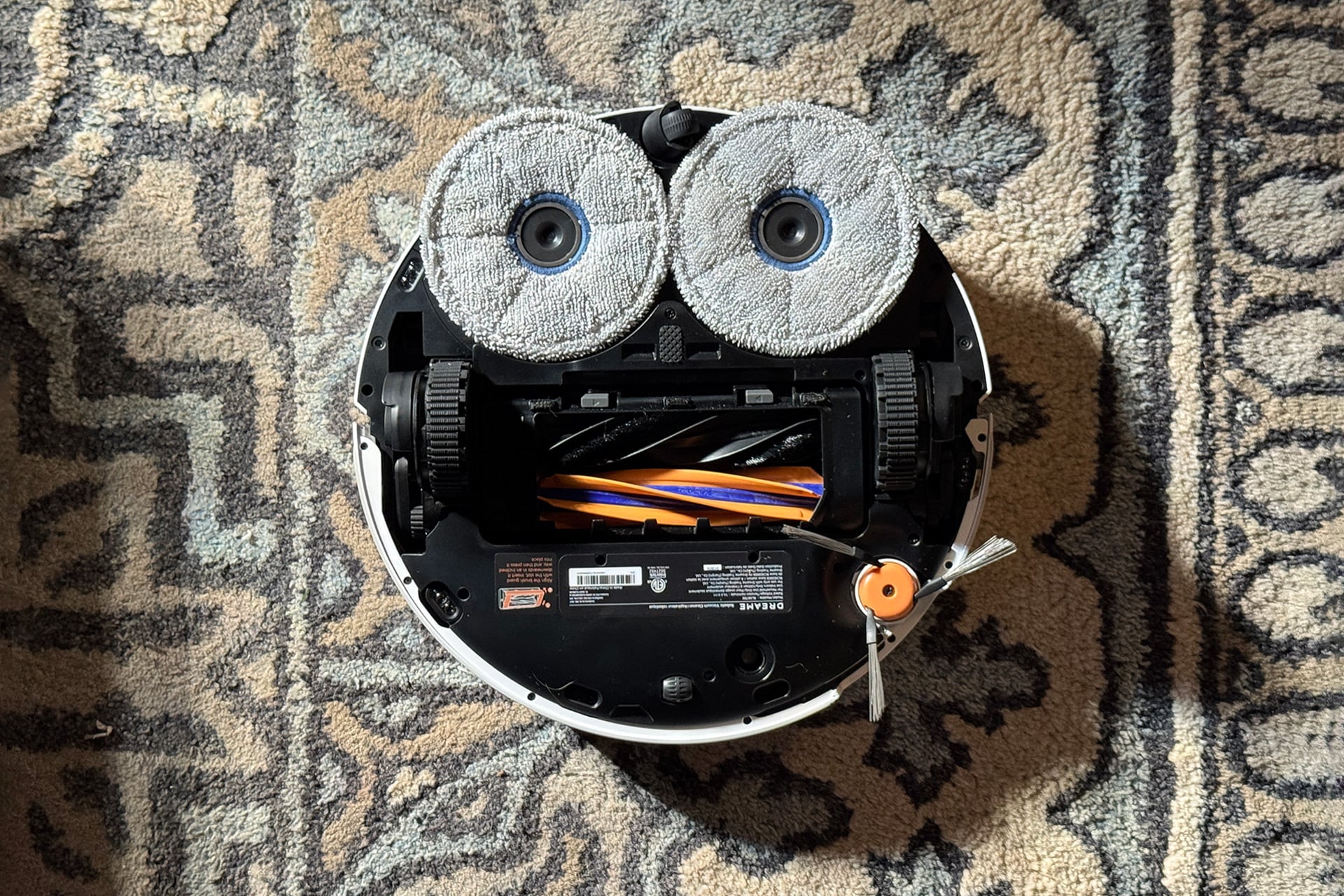
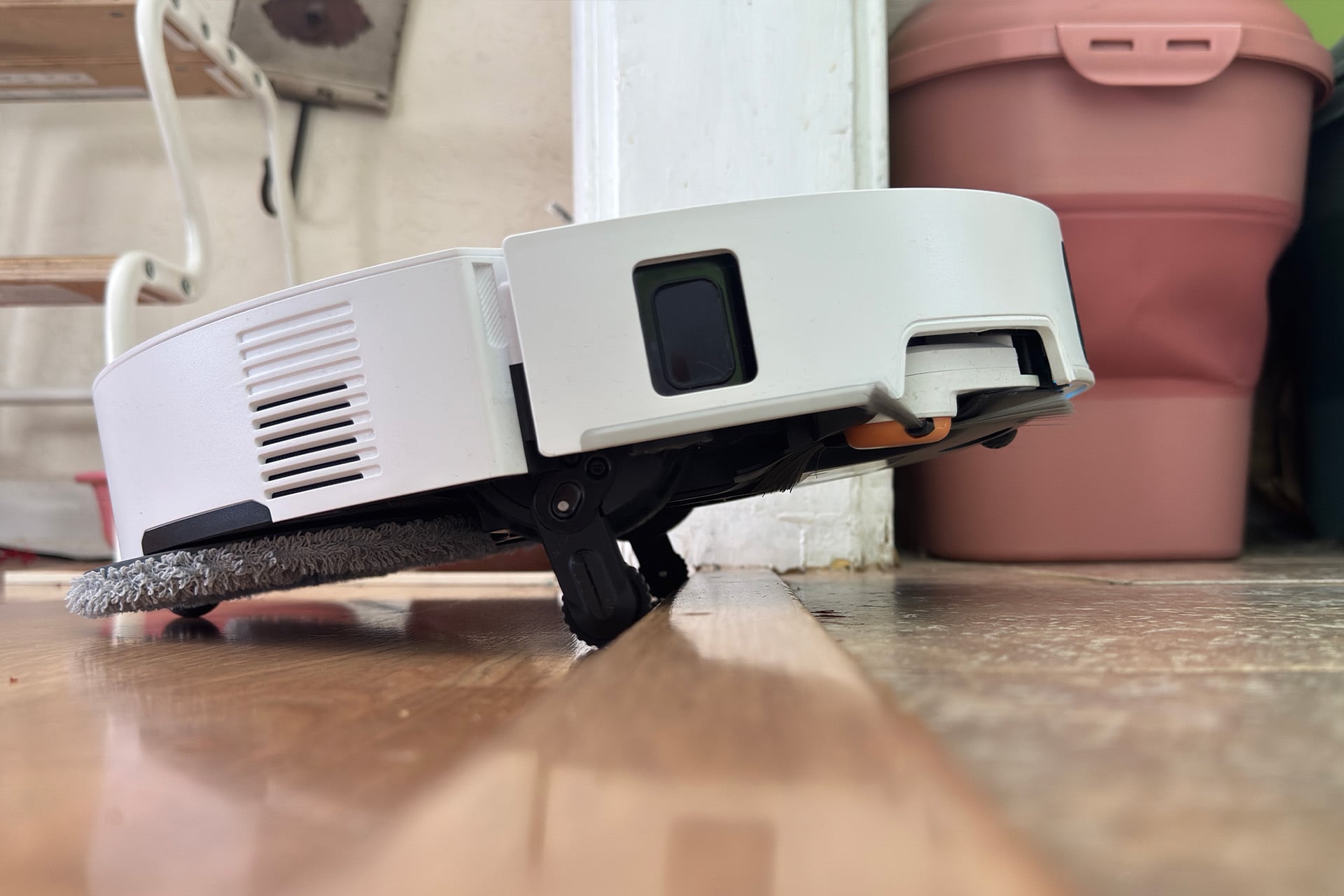
Other returning robotic bits include its side brush, which extends into corners, and dual mop pads, one of which swings out to mop edges. Tucked under the X60 are two stubby Wizard of Oz Wheeler legs that raise the X60’s front end up let it drive up to and, in a very seal-like fashion, waddle or flop over room transition strips, or clamber up very tiny steps that are up to 1.77 inches high.
See X60 Max Ultra Complete at Amazon
Also underneath are the X60’s dual rubber rollers, which never got tangled on hair or string or anything, just as advertised, although they did get jammed up by one of my kid’s socks, once. Dual cameras and a light in front for object recognition and navigation round out what is a very feature-packed robot vacuum.
As for performance, that’s a mixed bag. The X60 is definitely good at what it does, but there’s a disharmony about this robot vacuum that makes it feel like it’s worse than it is. For example: I was initially very impressed with the X60’s vacuuming performance, especially after my experience with the Aqua10 Ultra Roller. It consistently picked up nearly every robot vacuum-sized piece of debris it encountered, from dead leaves and scraps of paper to grains of rice and chunks of dried mud tracked in from outside. I dumped a tablespoon of sugar on the floor, and it left more than either the Matic or Eufy Omni E28, but still did a decent job. So I was confused, later, when its vacuum performance nose-dived and it stopped collecting even the lowest-lift debris throughout my home. Then I realized it was because I had turned on a feature that lifts the entire X60 chassis, ideally so it won’t drag its soggy ass across carpets when it’s been mopping.
The trouble with the chassis lift feature is that it doesn’t distinguish between thick carpets and very low rugs like the runner in my kitchen, and with the robot lifted, it becomes a terrible vacuum on all but the thickest carpets. At one point during testing, the X60 even stayed lifted on my hard flooring, although when I tested again nine days later, it didn’t do that, so hopefully, that was a one-time thing. To be fair, a Dreame representative told me that the chassis lift feature is intended for “long-pile carpets,” and that suction would reduce on lower ones. Unfortunately, the mop pads still dragged across the thick carpet in my hallway, which happened to be the only one where it still had enough suction to actually vacuum.
Ultimately, you’re better off turning on a feature that leaves the mop pads behind for vacuum-only jobs, but that doesn’t really help if the robot has to cross a carpet or rug to get to moppable floor. Is it a big deal to pick the X60 up and carry it to the room you want mopped? Not really. But I don’t want to do that with a $1,700 robot vacuum.
It’s a shame, because the X60 is mostly a very good mopping robot. I was really impressed when it fully cleared the sidewalk salt residue that builds up in our entryway, a result of walks we go on to keep the Winter Madness at bay. But when I sent it after a tablespoon or so of ketchup that I squirted on my dining room floor, it got about half of it up and smeared the rest across a larger area. (In fairness, only the Matic has passed that test for me—other robot vacuums have gotten closer, but each failed in one way or another.) Ketchup aside, though, the X60 left my floors with a nice, streak-free sheen.
Wayfinding is a struggle
I’m a little mean when it comes to testing the navigation skills of robots. I fully acknowledge that none of them can truly handle the chaos of a human household inhabited by one person with diagnosed ADHD (that’s me, I’m the problem!), one who suspects they have it, and one that is a child. So when I’m reviewing a robot vacuum, I try to approximate the lengths I would actually go to to make sure the floor is clear for the robot. Some nights, I’m diligent about this, even checking under our sofa and chairs, that sort of thing. Different nights, I half-ass it. On others, I don’t bother at all—I want to know how well a robot does in ideal circumstances, and also how easy it is to trip it up.
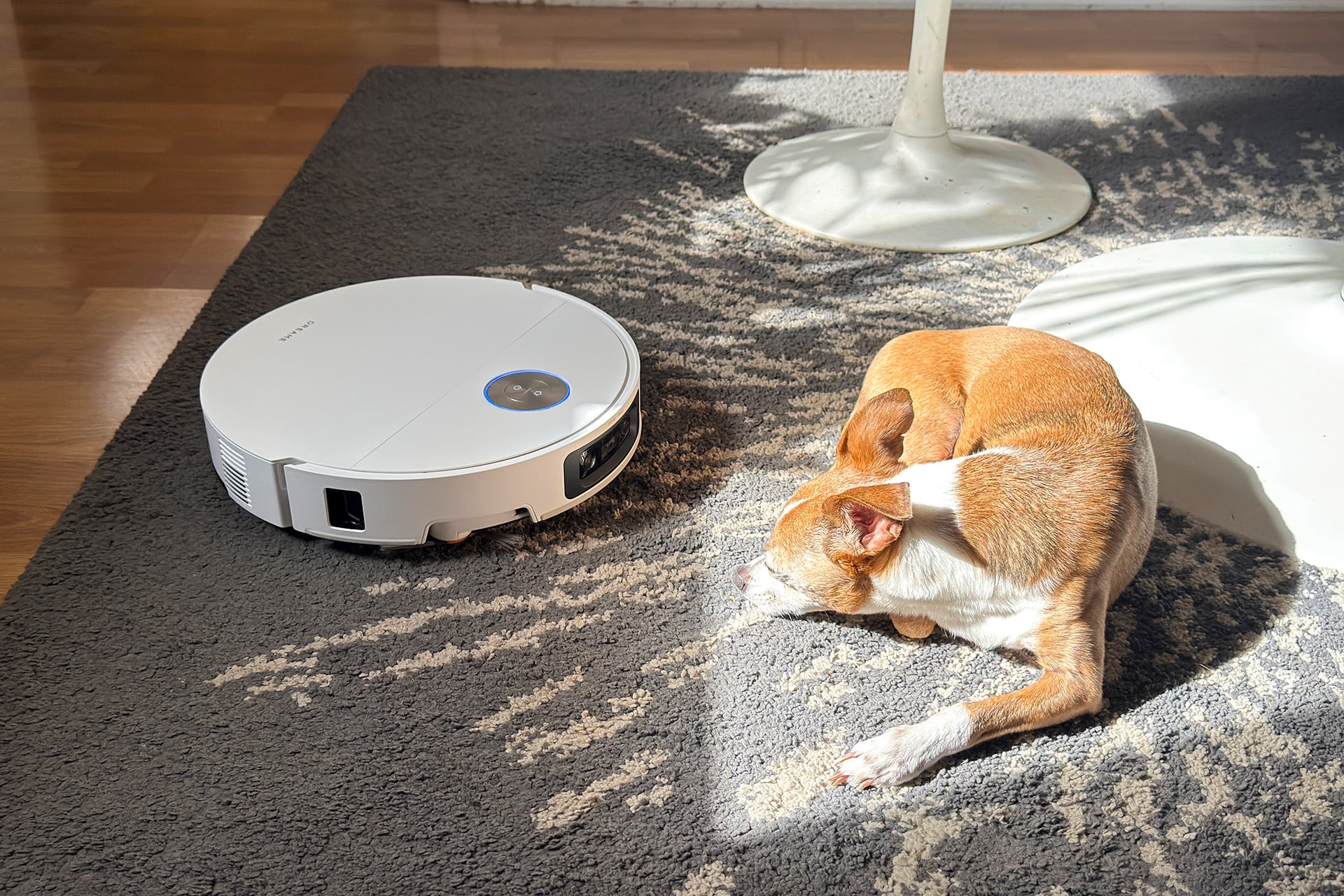
What I found is that the X60 doesn’t seem to work in a house like mine. It’s a relatively small, cramped house with effectively no long stretches of bare wall. Even when I left things as tidy as possible, I found the robot stranded somewhere more often than not, with an error message in the app indicating it couldn’t get to its dock. That was always during its nightly cleans, though—it hardly ever happened when I tested during the day. Maybe it’s because during the day, I could see what tripped it up. Something like a dining room chair that’s too close to the dock or a pet that needs shooing away. (My three animals are very used to robot vacuums, and have a very “no, you move” attitude when they approach.)
The X60 struggled to get around in other ways during testing, mostly in my dining room that, for whatever reason, seemed to be its own private Bermuda Triangle. That feature where it can lift itself up to climb over obstacles? Something about the way it saw my mid-century modern dining room set’s sweeping space-age bases made it think it needed to use that, so I watched as it repeatedly raised itself up and bonked into the stalk holding up one of my chairs. I also observed the X60 bumping into the same spot of the wall for a solid 30 seconds before turning slightly and doing it some more. When I added the dining room to an in-progress clean that I’d accidentally excluded it from, the robot spent an hour going over the same spots repeatedly before I opened the app to force it to move on.
Sometimes, it took the X60 between 70 and 90 minutes to clean the entire roughly 300 square feet of my home’s common areas; others it was 2 hours or more. When I split mopping and vacuuming, so that it did one job and then the other, the robot reported that it started the job at 11 p.m., as scheduled, and finished at 2:52 a.m. I don’t really care how long the robot takes to clean at night, and the X60 is thankfully pretty quiet when it goes about its business, but I like being able to run a robot vacuum for random jobs when I’m home and moving around the house, and it’s annoying when that takes more than a few minutes.
To its credit, the X60’s battery lasted throughout many of its longest cleaning cycles. It could finish up a 2-hour vacuum run of the roughly 300 sq ft. area I tasked it with cleaning, and would still have over 40 percent charge left—enough to let it go back and get the moppable parts of the same area without needing to recharge. For the times when the robot lacked enough battery to finish the job, it managed to go back to its dock, recharge, and resume just fine.
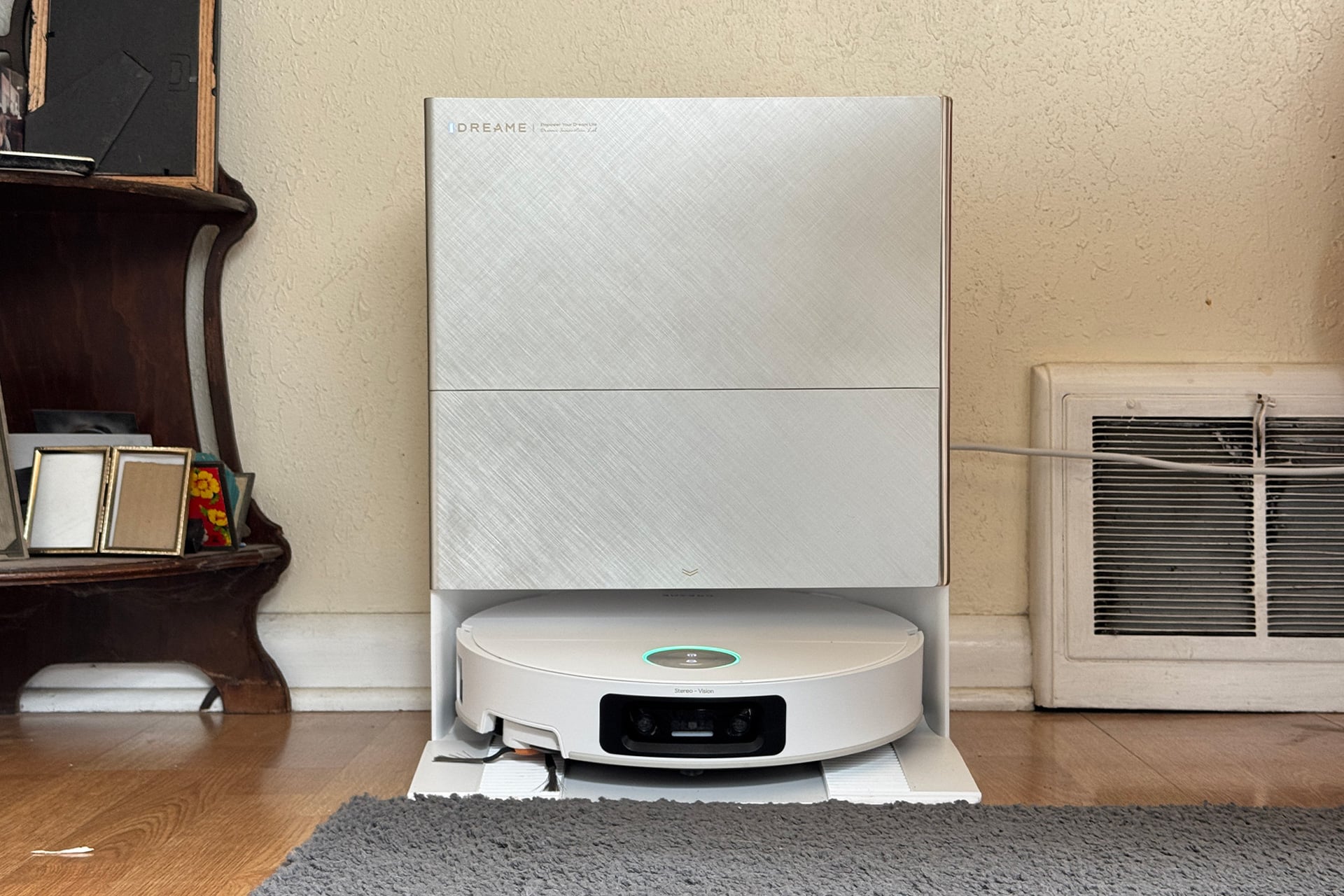
The X60’s dock was mostly a bright spot, at least insofar as it was relatively quiet when vacuuming out the robot vacuum’s dustbin. It was still noisy, but it didn’t have that startling jet engine quality that other robot vacuum docks, like the one for the Eufy Omni E28, have. The dock also washes and dries the mop pads after a clean, and I found that it was a lot less noisy and stinky than the Aqua10 Ultra Roller, which seemed to whirr and buzz for several minutes, and gave off an obnoxious chemical odor during cleaning. It also doesn’t give off a smell when vacuuming out the robot, something that the Omni E28 tended to do.
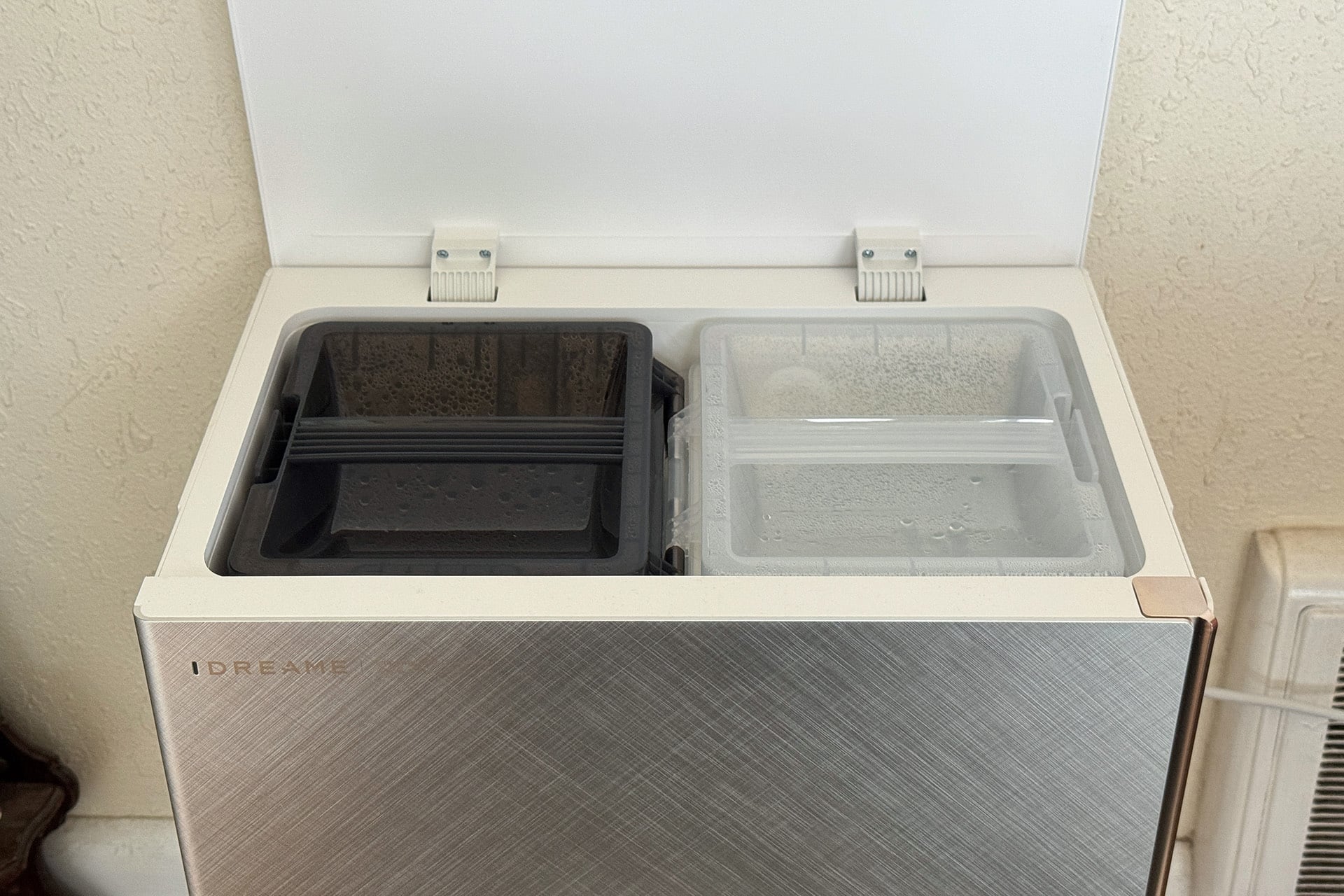
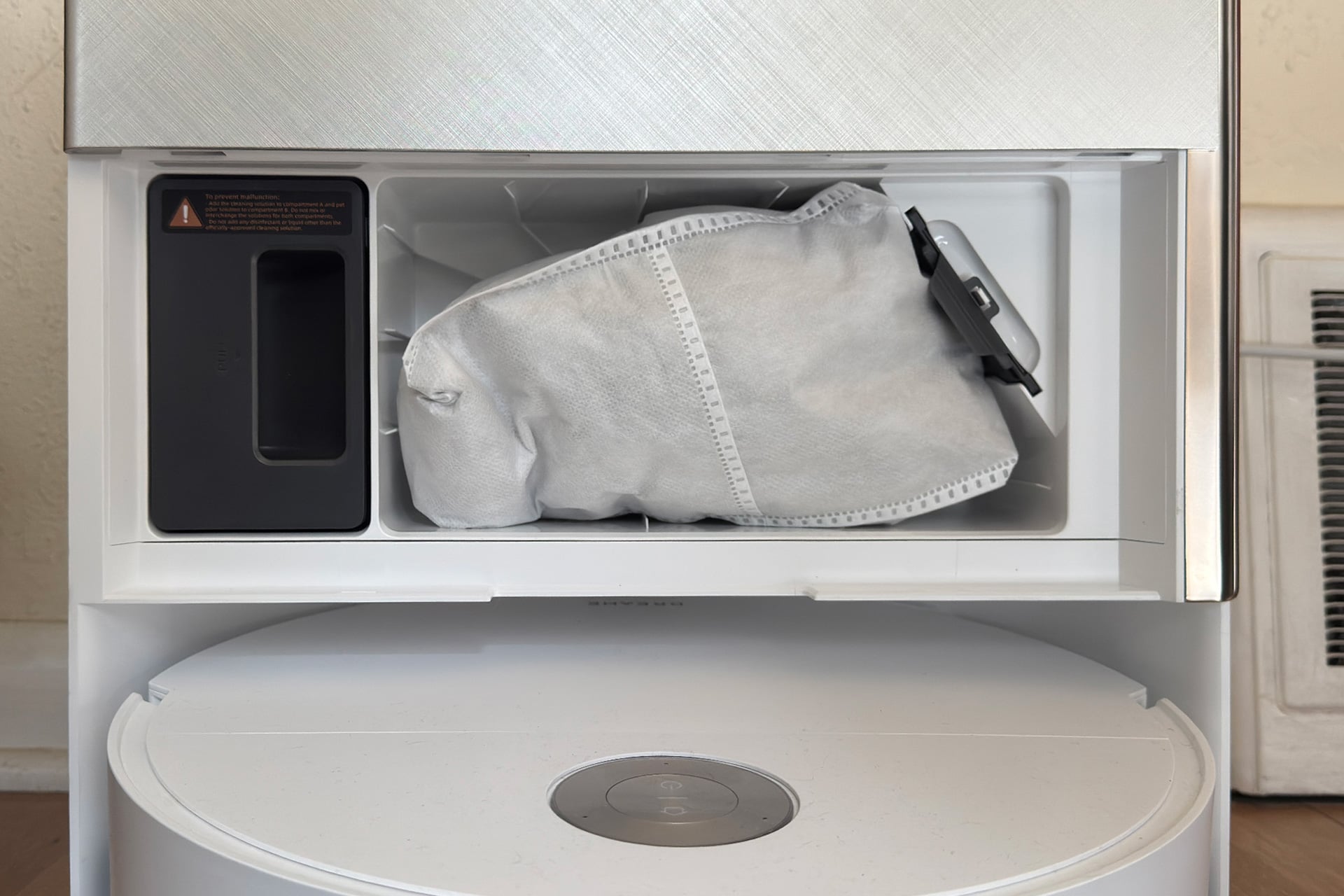
In the top of the dock, you’ll find two buckets—a four-liter one for clean water and a three-liter one for dirty water—while on the front, there’s a panel that hides the dock’s dustbag. That space also holds a container with two compartments for standard and pet-friendly floor cleaning detergents that are automatically mixed with water for mopping runs; which one depends on where the robot is going. (You can mark areas on the map where pets might go, like around dog food and water bowls.) That’s handy, but like nearly every robot vacuum maker, Dreame only approves of one floor cleaning solution: its own. So, if you don’t like the $18.99 Dreame charges for a 1L bottle of floor cleaner or Dreame stops making it, I guess your robot mop is now more of a robot floor wetter?
Options for days
For a device that’s meant to help you keep things tidy, the Dreame app, like the X60 Max Ultra Complete’s name, is a cluttered junk drawer of an app. The home screen is sensible—that’s where you’ll find a map and controls for starting and ending vacuuming jobs. Go into settings and cleaning history and scheduling are available right at the top. Handy!
Beyond that, things get a little labyrinthine. You can go several pages deep into areas like the pet features settings, most of which don’t actually work for me because the X60, like the Aqua10 before it, seems incapable of recognizing any of my pets. (If it did, it would be able to do things like take pictures of them with its front camera or take extra care to avoid them while it’s working.) There are other features that feel a little unnecessary, like the ability to turn off the robotic side brush.
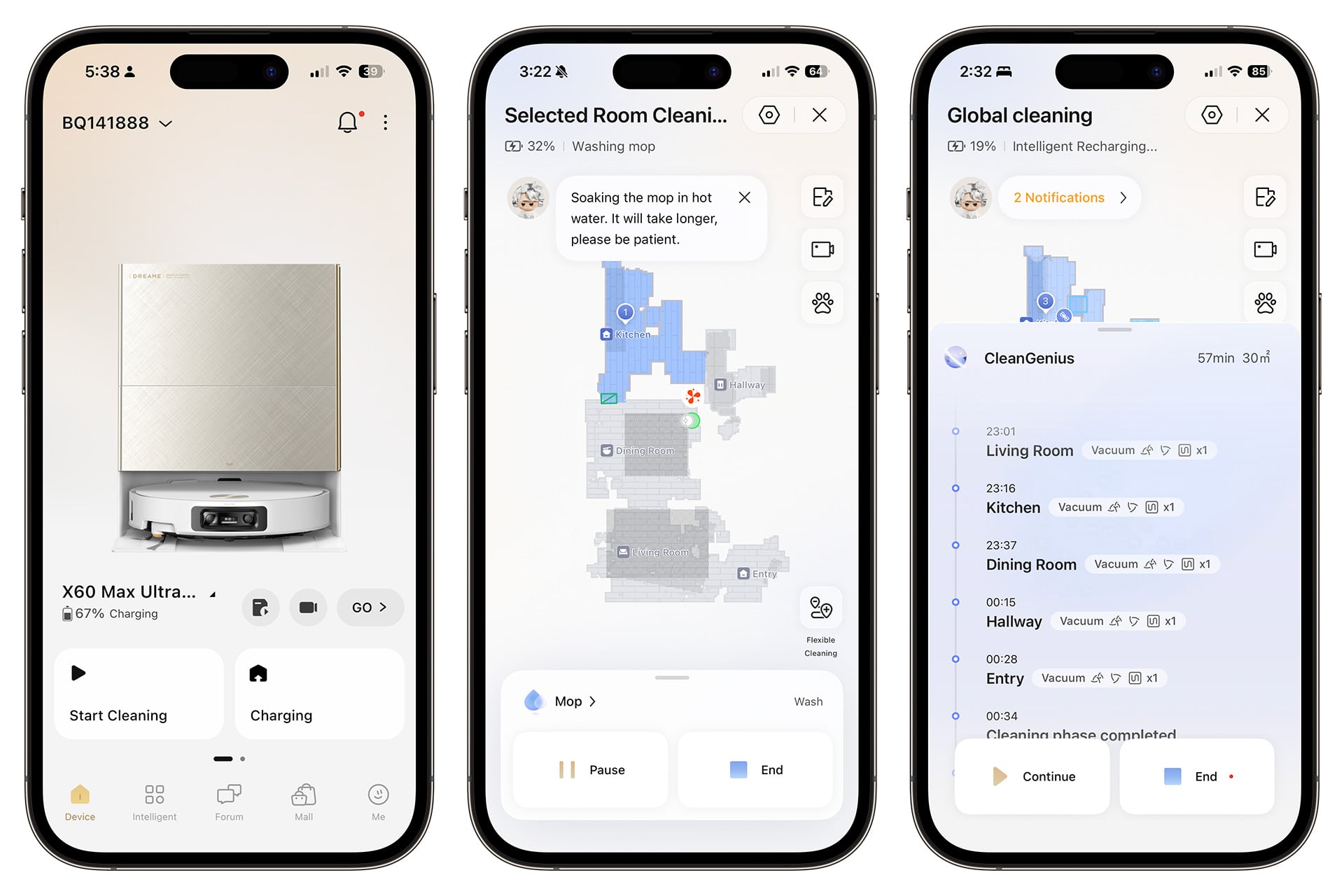
Some options didn’t seem to do much at all. When I activated the dock’s mop-washing water-saving mode, it used just as much water as it does in deep cleaning mode—roughly 12 ounces, or about six times what the Matic used and twice what the Eufy Omni E28 used when I tested each of them to compare. Maybe that’s less than I’d use for manual mopping, but it feels wasteful all the same. Also, when I turned off some of the more “intelligent” object recognition and collision avoidance features, which the app says can make cleaning runs take longer, things still took just about as long, only now the robot was (gently) bumping into furniture and not doing as well at avoiding things, like my kid’s sock that disabled it during one scheduled clean.
Still, there are some cool features to find if you dig around, including that manual drive-around mode, which I couldn’t do without thinking of the first-person demon cam scenes in The Evil Dead. And there’s a Wi-Fi signal map that accurately identified where my router was and where its signal was weakest. Good features or no, though, it feels like the Dreame app feels very quantity-over-quality.
An expensive headache
Robot vacuums are in this weird place right now. It feels like the companies making them are so concerned with pumping them full of features before the other ones beat them to it that they’re forgetting to focus on the details of usability and practicality. The Dreame X60 Max Ultra Complete is a good robot vacuum in a number of ways, but it’s too easy for a few tweaked settings to turn it from a useful, functional robot into one that won’t vacuum, wastes water, and drags wet pads across your carpet.
But I can get over a lot of those problems—and the cluttered app and the navigation issues—when the price is right. But boy howdy, is it not! If you’re asking me to spend $1,700 on a robot vacuum, it had better be incredible. And the X60 just isn’t that. Maybe it could be, with the right software tweaks and in the right home, but as it stands now, I just can’t recommend it to almost anybody.
See X60 Max Ultra Complete at Amazon
Read the full article here