
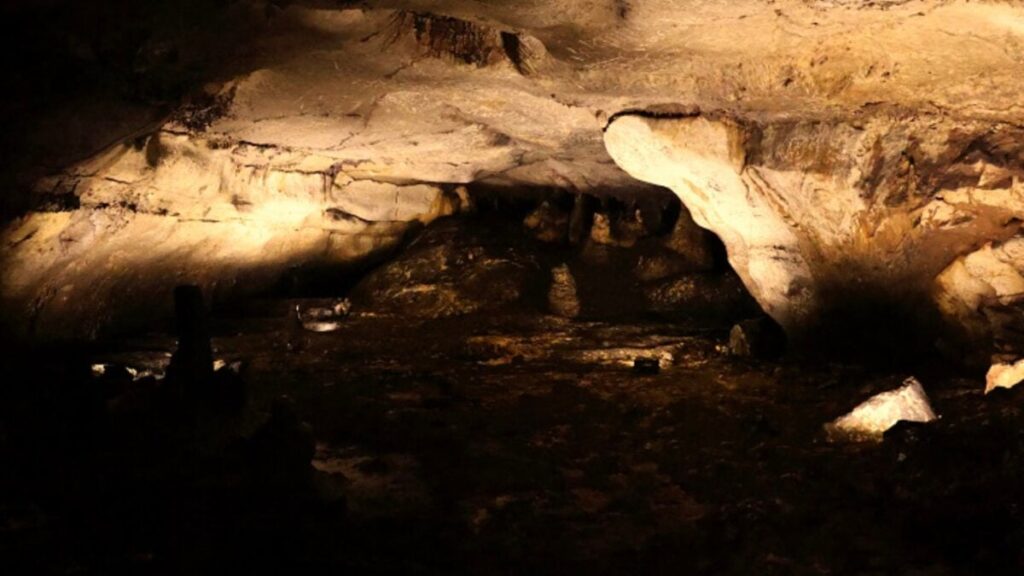
Archaeologists were used to thinking of western Spain’s Cova de les Dones (the “Cave of the Women”)—up a cliffside where the water of the Tambuc switches over into the Zapatero ravine—as primarily a site of Paleolithic rock art: a cow-like auroch painted on one wall, a prehistoric horse’s head etched into another, etc. But, last year, a team co-led by archaeologists Aitor Ruiz-Redondo and Virginia Barciela found a chamber hidden deep within the cave that has forever changed how scholars now think of the site and its role in the ancient world.
Their team called it a “Roman sanctuary,” initially identified by about 15 Latin inscriptions along…
Read the full article at GIZMODO.COM